
Analysis
How to Build a Hyperlocal Media Empire: Lessons from Georgia Fort
May 14, 2025

From maternity leave denial to a multiplatform powerhouse, Fort’s journey offers a roadmap for founders redefining journalism from the ground up.
What does it take to build a media empire in 2025? For Georgia Fort, founder of digital platform BLCK Press, it started with a no—and turned into a national yes.
When traditional media denied her maternity leave, Fort walked away from over a decade-long career—two Emmy nominations under her belt—and built something the industry said wasn’t possible: a trusted, thriving, Black-led multimedia operation serving the Twin Cities and beyond.
Today, she owns a radio station (Power 104.7 FM), runs an award-winning digital newsroom, anchors her own three-time Regional Emmy-winning TV show Here’s the Truth, and launched a nonprofit broadcast journalism training center for the next generation of journalists. She’s not just making content—she’s making space.
Fort recently sat down with Tracie Powell, CEO of The Pivot Fund, for a one-on-one conversation about what it really takes to build a media empire. This conversation was made possible through generous support from the John S. and James L. Knight Foundation.
“To me, building a media empire means we’re taking up space,” Fort told Powell. “A lot of outlets in this market try to minimize our contributions. We’re making it really difficult for them to do that.”
BLCK Press embodies what The Pivot Fund uncovered in its Minnesota News Landscape Analysis: Trust—not legacy—drives engagement. Fort’s work makes that truth undeniable.
From Crisis to Creation
Fort launched BLCK Press during the uprising following George Floyd’s murder in 2020. She witnessed firsthand the failures of traditional news media to capture the grief, resistance, and humanity unfolding around her.
“There were so many stories being ignored or misrepresented,” she said. “I felt a responsibility to document history honestly, in real time.”
That impulse—to fill the gap with truth, not polish—continues to shape her newsroom.
“Community wants to get their news in a way that’s more authentic,” Fort said. “Even if it’s not the most polished video or article, if they can feel the heart in it—and know it hasn’t been watered down—that’s what matters.”
Scaling on Intention, Not Permission
Building BLCK Press was never about chasing profit. It was about impact. But Fort has also been intentional in how she grows—scaling her vision to match available resources and strategically diversifying revenue beyond philanthropy.
Amid the loss of $250,000 in corporate support as Target pulled back its DEI efforts, Fort’s acquisition of a radio station proved to be a smart investment in sustaining her company.
“I had that foresight,” Fort said of knowing that funding Black initiatives was not always going to be the ‘trendy’ thing. “I knew we were going to need some bandwidth—we were going to need other avenues for people to engage with us.”
Owning Power 104.7 FM has created new income streams through advertising, sponsorships, community events—and more importantly, deeper connection.
“People trust who they know,” she said. “They trust who they have a relationship with. That’s going to continue to have a tremendous impact on journalism.”
Growing Your Own Talent Pipeline
Fort’s Center for Broadcast Journalism is more than a media bootcamp—it’s a long-term bet on community power. The nonprofit gives young people of color access to training, experience, and industry networks.
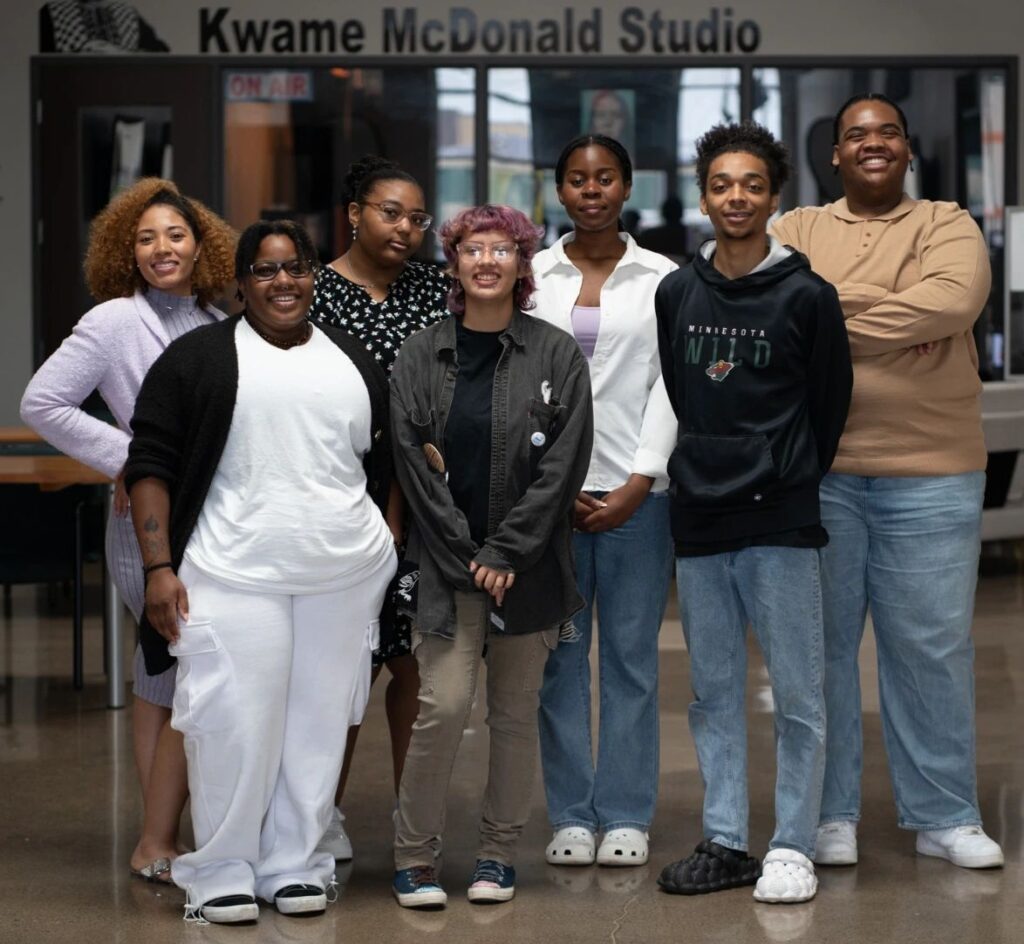
“Journalism is a system, and like any system, it has inequities,” Fort said. “There are standards in journalism that we must uphold, and there are aspects we must interrogate.”
She’s clear: Reimagining journalism isn’t just about content—it’s about control, culture, and care. Her media model funds its own, trains its own, tells its own stories, and refuses to ask permission to exist.
Lessons for Other Founders
Here are a few key takeaways from Fort’s journey that can help other independent media leaders:
- Start with the need—then scale with intention. BLCK Press wasn’t born with a five-year strategic plan. It was born from urgency, built on trust, and scaled step-by-step with community at the center.
- Own your platforms.
Whether it’s a newsletter, a podcast, or an FM frequency—Fort knows platform ownership creates sustainability, autonomy, and revenue options beyond grant cycles. - Train your next generation.
Don’t just hire—mentor. Build an internal pipeline that strengthens your newsroom and the wider ecosystem. - Don’t dilute your values.
Fort has been clear from the beginning: “We didn’t start this company to make a profit—we started it to make an impact.” - Stay rooted in your community.
Authenticity, not polish, wins loyalty. “Community has to stay at the forefront,” Fort said. “It has to stay at the center of who we are and what we’re doing.”
Georgia Fort’s empire isn’t built on scale alone. It’s built on clarity of purpose, community accountability, and the radical idea that journalism can serve—and belong to—those who’ve been shut out of it.
For media founders asking “What’s next?”—this is it.