News
What Don Lemon Can Teach Publishers About Earned Revenue
October 14, 2026
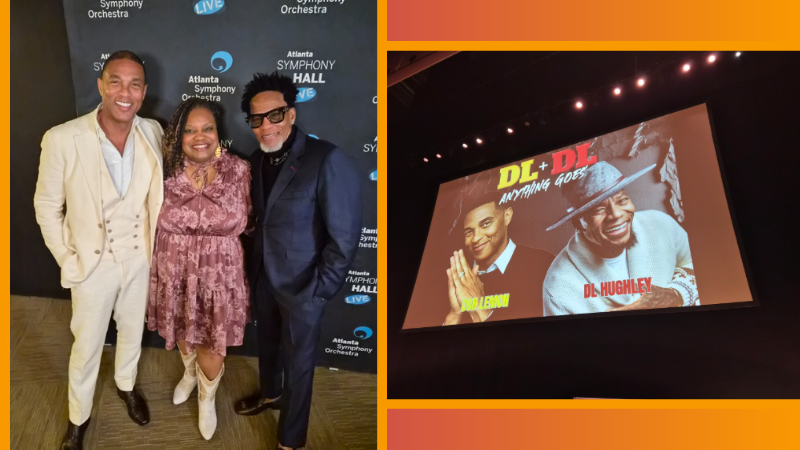
An evening of politics, comedy and community offered a lesson in giving audiences something worth paying for.
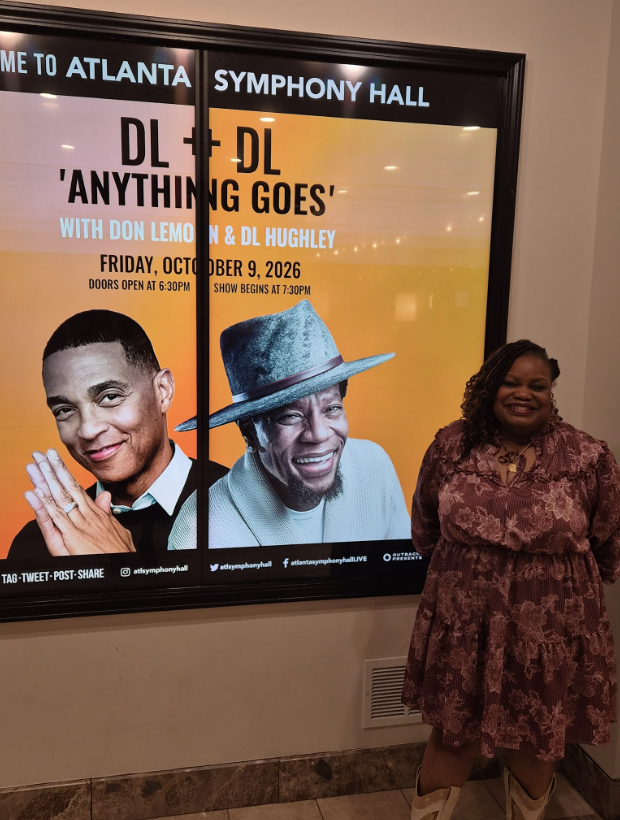
I went to see Don Lemon and D.L. Hughley at Atlanta Symphony Hall on Friday night and found myself thinking about the business of independent media.
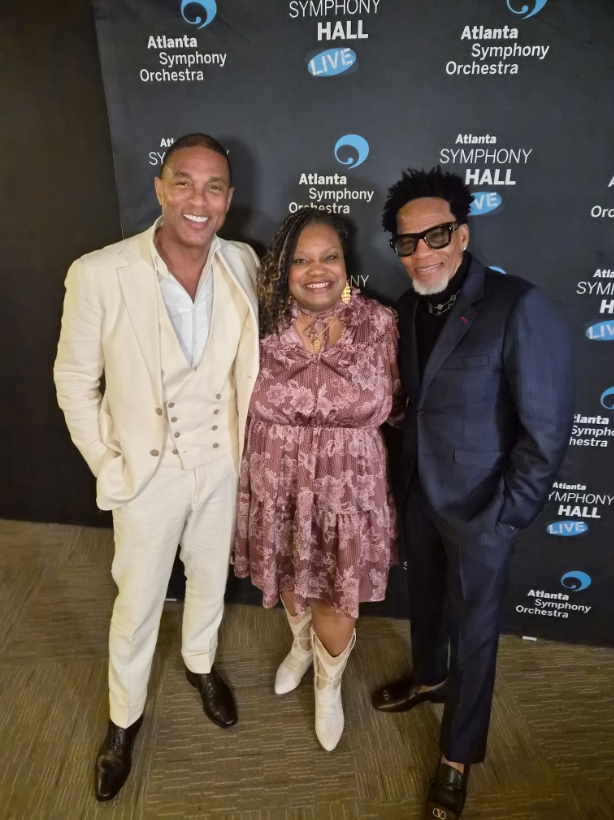
For transparency: A friend invited me. She is a “Lemon Head,” the affectionate name Lemon uses for his paying YouTube members. She purchased the $150 VIP experience, which included front-row seating and a post-show meet-and-greet with the former CNN anchor and the comedian, complete with pictures.
That detail matters.
My friend already pays to belong to Lemon’s online community. Now she was paying for an opportunity to experience that community in person—and bringing someone else along.
Publishers, pay attention.
The show, DL + DL “Anything Goes,” brought political discussion and comedy to the stage usually occupied by Atlanta’s orchestra. Lemon carried many familiar elements of his daily YouTube show into the room. The conversation ranged from national politics to Georgia’s governor’s race, Atlanta’s growth and the growth of Islam in America. Pastor Jamal Bryant joined them for a discussion that included Black men’s voting patterns and America’s history of racial violence.
There was plenty to debate. But what interested me as much as the conversation was the business happening around it.
Outside the meet-and-greet, Lemon’s husband, Tim, was selling Lemon Nation hats, T-shirts and other merchandise. Shirts I saw priced at $55 earlier were offered for $36 as the crowd thinned.
Membership. Tickets. A premium experience. Merchandise.
One audience relationship, several opportunities to earn revenue.
Give people another way to experience what they already value.
Lemon took a familiar online product and created a live experience around it. People could spend an evening with personalities they already knew, hear them engage with local issues and meet other people who shared their interests.
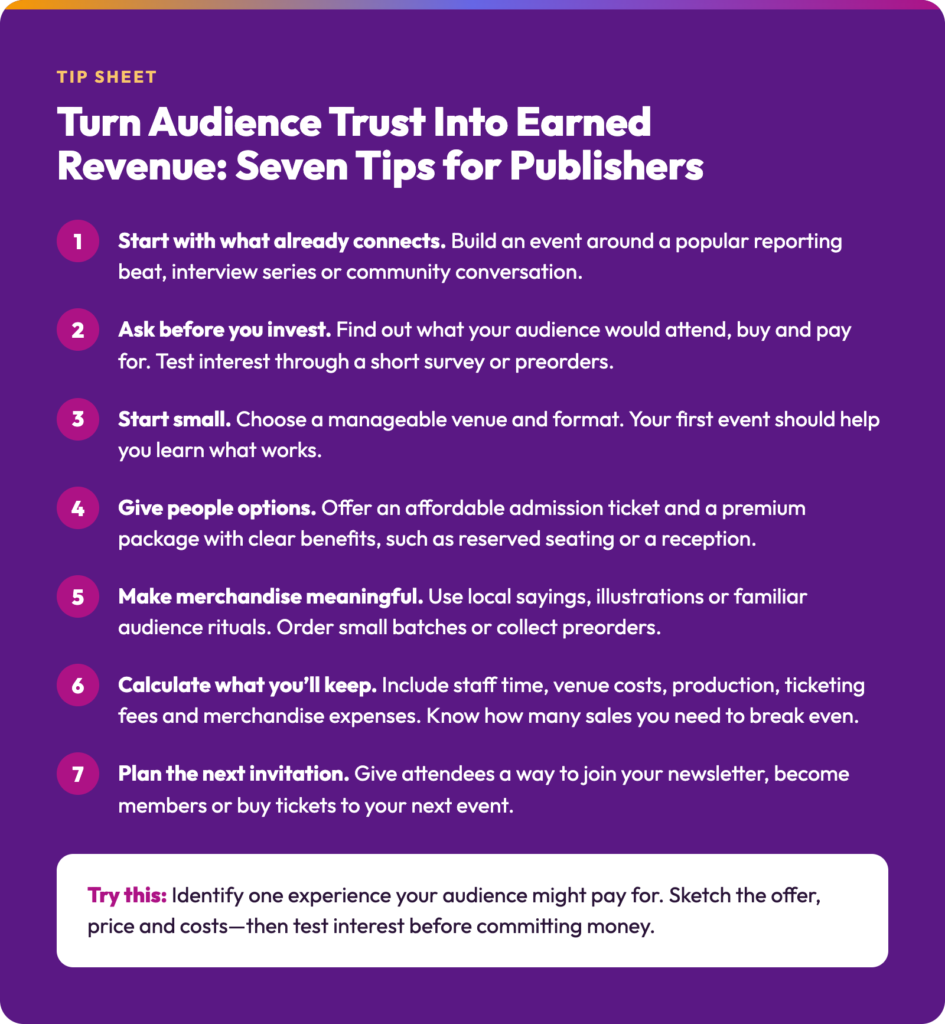
Hyperlocal publishers can build from that same principle. What do audiences already come to you for? Your interviews? Your neighborhood reporting? Your ability to explain local politics? Your knowledge of the community’s history?
A popular interview series could become a ticketed conversation.
A neighborhood newsletter could host an evening about the community’s changing identity.
Reporting on food, music or culture could become an experience featuring the people who make that coverage possible.
Start with something your audience already values. Give them a compelling reason to experience it together.
Some of our grantees are already putting this into practice. Pasa la Voz recognized Día de los Muertos as an important cultural touchpoint for its community and launched an event that ultimately attracted thousands. Vendors rallied to participate, offering everything from information about legal and health services to local food.
BeeTV created a community service awards gala that honors local heroes while raising money for its newsroom. Both built experiences around what their communities value—a cultural tradition, recognition of neighbors making a difference—and gave people a reason to gather and support their work.
Belonging has value.
My friend’s connection to Lemon brought us into that room. “Lemon Head” and “Lemon Nation” give supporters a shared identity. The merchandise lets them carry that identity home.
Some of Lemon’s merchandise carried the slogan “Old People Be Knowing,” a phrase he also wove into the show through call-and-response with the audience. The merchandise gave supporters something to take home that reflected an experience they had shared.
Community-rooted publishers should understand this instinct. People take pride in their neighborhoods, their cultures and the institutions that see and serve them.

What would your audience proudly wear? A publication’s logo might work. So might a neighborhood saying, a local illustration or a phrase that captures why your work matters. Listen for the phrases and local references your audience already embraces. Those can become the foundation for merchandise that feels like it belongs to the community.
Ask before ordering boxes of shirts. Preorders and small batches can help you learn what people want without tying up cash in unsold inventory.
Offer a premium experience people actually want.
The VIP package had a clear proposition: front-row seats, a meet-and-greet and pictures.
Your publication may have a different offer. Reserved seating, a reception with event participants or a small gathering after a live interview could give enthusiastic supporters a reason to spend more.
Keep the benefits concrete and the editorial boundaries clear. A premium ticket buys an experience; it cannot buy influence over coverage.
And keep an accessible entry point. People should be able to participate even if the premium package is beyond their budget.
Do the math before booking the room.
I don’t know what Lemon and Hughley earned after paying for the venue, production, travel, staffing and other expenses. A room full of paying customers does not automatically mean a profitable event.
Publishers need to account for staff time, too. Set a break-even target, test demand and start at a scale you can manage. A well-planned gathering of 50 people can teach you plenty about what your audience will support.
Then give attendees a reason to stay connected: a newsletter invitation, a membership offer or a date for the next event.
You do not need Don Lemon’s national profile to try this. You need a clear understanding of your audience and something they value enough to purchase.
Your reporting already helps people understand where they live. What else could you create around that relationship that they would gladly pay for?