
Resources
What Baltimore Beat’s Revenue Experiments Reveal About Local News
July 23, 2025
Baltimore Beat’s latest revenue experiments haven’t delivered a financial windfall—but they’ve produced something just as valuable: insight. In a media landscape where local newsrooms are pushed to pivot fast and often, the Beat offers a counter-model rooted in learning, community connection, and thoughtful experimentation.
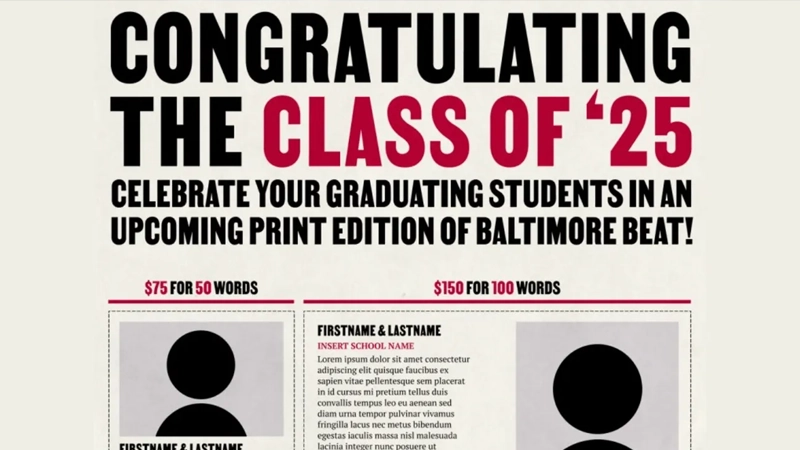
Earlier this year, the Beat ran a campaign giving families the chance to publish high school graduation photos in its print edition. Despite promotion, it only brought in about $300. Jonathan Keen, the outlet’s CFO, and Lisa Snowden, editor-in-chief and cofounder, believe timing was the issue. Next year, they plan to start outreach as early as September—and expand it to include middle school graduations.
“People love our print edition. It makes people slow down and get away from a screen. Our idea to run graduation photos in the paper was a successful operation, but didn’t bring in a ton,” Keen said. “That gives us the insight we need to try different things.”
This kind of nimble response illustrates the Beat’s core strategy: test, learn, adjust. Even modest pilots are treated as springboards for bigger ideas—like a potential “pay-what-you-can” ad campaign for local businesses.
Revenue That Builds Relationships
Other experiments have yielded tangible returns. A branded beer partnership with a local brewery netted $1,000 in its first month. The team has also thought about creating their own cannabis gummies as another way to tap into a market that could help fund their journalism.
“It could be something to help with that cycle of bringing in some dollars, but also getting Baltimore Beat’s name in front of more people,” Keen said.
The Beat’s annual Summer Jam is another example. Now in its third year, the community event doubles as a fundraiser. This year, they’re testing higher ticket prices and expanding sponsorships. The goal is dual: drive revenue and deepen local engagement.
But perhaps their most innovative idea isn’t a product or event. It’s a job: a hybrid audience engagement and online fundraising role that would aim to foster deeper relationships, unlock smarter use of first-party data, and integrate editorial and financial goals more seamlessly.
This work is bolstered by the Beat’s involvement in the NPAI CoLab, which is helping newsrooms figure out how to use AI to better understand and monetize their audiences.
Collaboration Over Competition
Through the volunteer-run Movement Media Alliance—a network Keen helped found—the Beat is collaborating with other independent, non-corporate news organizations to find ways to help sustain their futures.
They’re also thinking hyperlocal. A proposed “food truck night” in the parking lot of The Real News Network (where the Beat shares space) would create a unique blend of community gathering, print distribution, and small business promotion. It’s a bold rethinking of what newsroom presence can look like—beyond the page or screen.
Lessons for the Field
Baltimore Beat’s journey holds lessons for other local outlets:
- Start Small, Learn Fast: Modest pilots can surface valuable insights—like timing, audience segments, or new products.
- Partner Locally: Creative local collaborations—from craft beer to cannabis products—diversify revenue and strengthen community ties.
- Integrate Fundraising and Engagement: Blending these roles helps build authentic relationships that fuel sustainability.
- Share the Load: Networks like the Movement Media Alliance demonstrate the power of collective strategy.
- Show Up Physically: Community events and print distribution deepen loyalty and visibility.
- Use Data Intentionally: AI and first-party insights can sharpen outreach and increase yield.
Baltimore Beat isn’t chasing a silver bullet. It’s building a culture—of experimentation, creativity, and connection. In a sector desperate for sustainable solutions, the Beat offers a grounded, replicable roadmap: stay curious, collaborate deeply, and never lose sight of the community you serve.