
Analysis
Finding Strength in Community:A Transformative Gathering in Tulsa
February 26, 2025
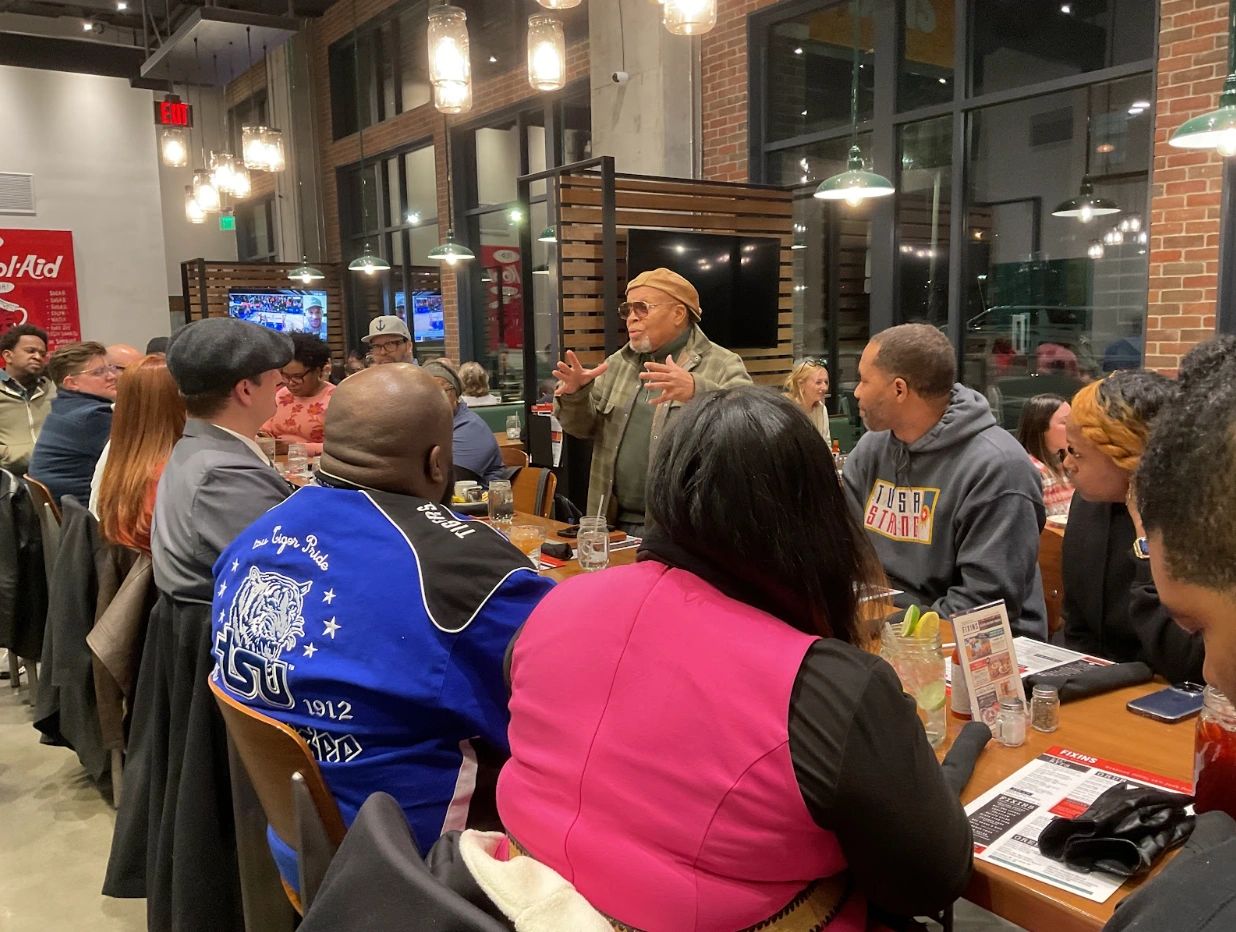
Earlier this month, I had the honor of meeting with 18 news publishers and media founders in Tulsa. It was a warm and eye-opening experience, one that underscored both the challenges and opportunities facing Black- and Brown-led media organizations in Oklahoma.
Tulsa holds a special place in my heart. My dad attended school there when I was a kid, and I have close family members who still call Tulsa home—respected community leaders who have dedicated themselves to the city’s progress. That deep personal connection made this gathering even more meaningful.
These media entrepreneurs—some longtime stalwarts of their communities, others newer to the scene—came together for the first time over a meal at Fixins, a Black-owned restaurant in downtown Tulsa. While each of them has been working tirelessly to inform and serve their audiences, many had never had the opportunity to meet and learn from one another. This gathering was a powerful moment, not just for the connections made but for the collective realization that, together, they hold significant influence in shaping the future of local news in Tulsa.
I was initially in Tulsa for a funder convening hosted by New Profit, an organization that has provided direct grant support and wrap-around services to The Pivot Fund over the past year. During this convening, we were introduced to an executive with the Tulsa Community and George Kaiser foundations—a connection that could be valuable for local media founders eager to explore new funding opportunities.
Our Thursday evening gathering with these media entrepreneurs quickly turned into a candid conversation about sustainability, funding, and the dynamics of power in philanthropy. Given the recent announcement of a $14 million investment into Tulsa’s local news ecosystem—an effort led by the American Journalism Project (AJP)—many of the media founders had pressing questions. Some were already part of the initiative, though they voiced concerns about a lack of clarity regarding its structure. Others, particularly those who had been left out of initial discussions, expressed hesitancy about an initiative they felt had been designed without their input.
What emerged was a clear message: Many media entrepreneurs are seeking funding models that prioritize partnership over control. They want investment that respects their editorial independence and community-rooted missions—not just funding that comes with strings attached. Even some organizations included in the initiative have yet to sign formal agreements, highlighting an inequitable power dynamic that needs to be addressed.
Additionally, participants raised concerns that some organizations included in the initiative do not necessarily reach the communities they claim to serve. In particular, they pointed to the legacy Black newspaper at the heart of the initiative, describing it as “dormant” and questioning why it was prioritized for investment while other Black- and Brown-led outlets with sizable, engaged audiences were left out. In fairness, the Oklahoma Eagle has long served Tulsa’s Black community. However, like many legacy Black newspapers, its slow transition to digital has resulted in declining market share and audience. Since joining as executive editor in December, veteran journalist Gary Lee has been praised for elevating the paper’s content. Yet, it continues to face challenges in audience growth, and concerns remain about whether it will sustain its identity as a Black-led and Black-serving news outlet under its new structure. Without strong audience, reach and community connection, even well-funded efforts risk failing to deliver the news and information residents need.
In response to criticism late last year from a local Indigenous publisher, AJP stated that more outlets would be included in the initiative. Yet, many of the media founders at our gathering remained skeptical, questioning whether this would lead to a meaningful shift in how power and resources are distributed. Instead, they asked whether The Pivot Fund could help by serving as a bridge to other civic news and information funders—supporting them not just with capital but with strategic connections and guidance.
While The Pivot Fund made no promises beyond introductions and support, we left with a deeper understanding of the work these founders are doing and the barriers they face. One of the first connections we hope to facilitate is with the leaders of the George Kaiser Family Foundation and the Tulsa Community Foundation. But beyond the immediate opportunities, perhaps the most significant outcome of this gathering was the realization among the founders themselves: There is power in numbers.
By coming together, they have the ability to collectively advocate for a more equitable distribution of resources—ensuring that local funders recognize the value they bring to Tulsa’s media landscape and the value of their respective audiences. Whether or not they become part of the existing initiative, these publishers and founders now have a stronger network to lean on as they continue their critical work.
At The Pivot Fund, we remain committed to supporting media entrepreneurs of color, whether through direct investment or by helping them build relationships that lead to sustainable growth. And after what we witnessed in Tulsa, one thing is clear: This group of founders is ready to step into its power.
We are not quoting participants in this newsletter article, as we agreed to an off-the-record conversation ahead of the dinner.