
News
The Support You Need Might Be Closer Than You Think
April 1, 2026
What “legal deserts” reveal about where hyperlocal newsrooms should look for help
For many hyperlocal publishers, the challenge isn’t just reporting the news, it’s navigating local systems that make even basic accountability reporting difficult.
In some communities, those challenges are compounded by what Amethyst Davis of the Harvey World Herald calls a “legal desert”— a place where access to legal support is limited or nonexistent. Harvey, a suburb south of Chicago, not only lacks consistent local news coverage, it also lacks accessible legal resources for journalists trying to hold public institutions accountable.
When basic information becomes a legal battle
At the Harvey World Herald, even routine reporting can turn into a fight.
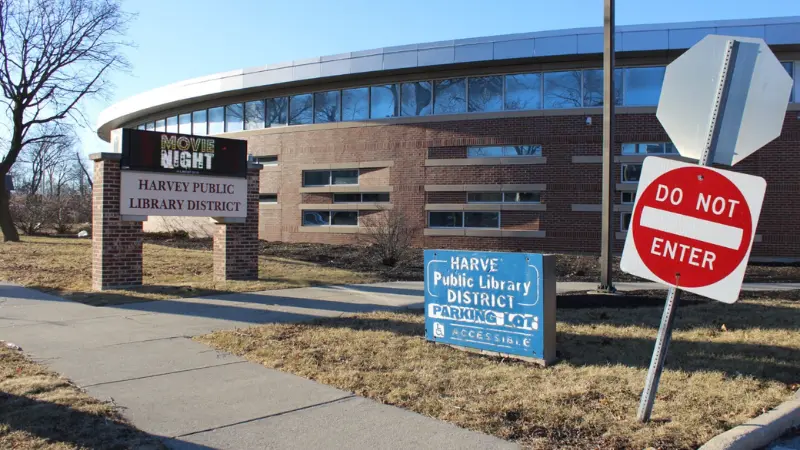
After submitting a public records request for financial documents from the Harvey Public Library District, the newsroom was forced to pursue litigation just to access basic records.
“You should not have this many problems trying to get something as basic as a bills list or an invoice,” Davis said. “Harvey is one of those places where people have to wage the grandest of battles for the bare minimum.”
In communities like Harvey, access to legal support is limited. Many local firms represent government entities, leaving few options for journalists seeking accountability.
A one-person newsroom carrying it all
Those challenges fall hardest on small teams.
Davis is currently the only full-time staff member, managing editorial, operations, fundraising and HR—while also navigating legal battles.

“You’re trying to oversee growth and development… and then you have to go to court over something as simple as a bills list,” she said.
For hyperlocal outlets, these barriers directly reduce reporting capacity.
Creating a public record where none exists
In Harvey, there is also no public access channel, and government meetings are not consistently recorded.
So the Harvey World Herald does it.
The newsroom records meetings, publishes them online, and creates an archive residents can access—especially those who can’t attend in person. Without that work, there would be no public record.
And without a local newsroom, many accountability stories would never surface.
In one recent case, a tip from a resident led to reporting that triggered an investigation into a county commissioner was claiming tax exemptions on an abandoned property.
That tip only surfaced because the community knew where to go.
The real lesson: look beyond your immediate community
If Harvey is a “legal desert,” where does support come from?
For the Harvey World Herald, it came from nearby.
To pursue its FOIA case, the newsroom secured pro bono legal support from a Chicago-based firm already familiar with issues in Harvey and experienced in supporting local newsrooms in the region.
That distinction matters.
The lesson isn’t that support always exists within a newsroom’s immediate community, but it may exist within reach.
For hyperlocal publishers facing similar challenges, that can mean:
- Looking to regional legal partners in nearby cities
- Connecting with institutions or universities in surrounding areas
- Learning from peer publishers operating in similar ecosystems
As Davis puts it simply: “Be a squeaky wheel.”
Why this matters
Harvey’s story is not unique.
Across the country, rural and under-resourced communities face similar barriers: limited legal access, weak transparency, and shrinking local news capacity.
At the same time, these newsrooms are doing essential work—documenting public meetings, preserving local history, and holding power to account.
If they disappear, so does the record.
And while support may not always exist within a community itself, this is a reminder that nearby, regional relationships—built on shared context and understanding—can be just as critical to sustaining local journalism.