
News
The Pews and the Press: What Faith Communities Reveal About the Future of Local News
April 1, 2026
As federal support for social safety nets declines and philanthropic resources grow more constrained, community newsrooms are adapting. Many are building sustainability through partnerships closer to home—particularly with faith communities that have long served as anchors of local civic life.
For funders, this shift raises a critical question: are current investment strategies aligned with how local journalism is actually sustained in communities?
Across the country, community-rooted outlets are collaborating with churches and other faith institutions to support fundraising, distribution, audience engagement and community programming.
These are not peripheral relationships. They are becoming core to how some newsrooms survive and grow.
And they point to a broader insight: some of the most effective infrastructure supporting local journalism already exists outside traditional media and philanthropic systems.
A historic infrastructure
This is not a new model—it is a continuation of one.
The first Black newspaper in the United States, Freedom’s Journal, emerged from networks connected to Black churches and abolitionist organizing. These institutions provided not only resources, but trusted pathways to audiences.
That same dynamic persists today.
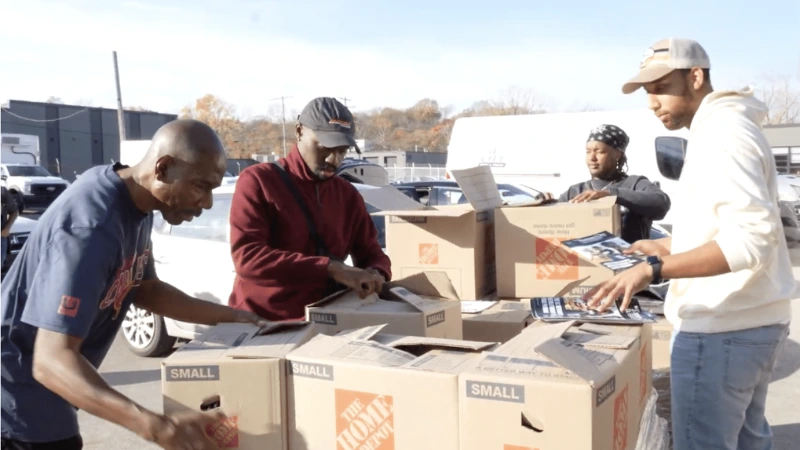
At The Kansas City Defender, partnerships with churches have led to direct financial contributions—including gifts of $10,000 and $5,000 from local congregations—as well as in-kind support for mutual aid efforts such as food distribution and clothing drives.

For funders, the takeaway is not just that these partnerships exist—but why they work.
They are effective because both institutions are rooted in the same communities and respond to overlapping needs. They are aligned in mission, proximity and trust.
“A lot of progressive churches are trying to find ways to be impactful with people who are most marginalized,” said founder Ryan Sorrell. “We’re already directly connected to those communities.”
Distribution, trust and access
Faith institutions also function as powerful infrastructure for distribution and engagement—areas where many newsrooms struggle and where philanthropy often underestimates existing assets.
They offer trusted networks where information moves quickly and credibility is already established. For some outlets, churches serve as physical distribution hubs for print publications. For others, they provide access to audiences and sources that would otherwise remain out of reach.
At Conecta Arizona, these partnerships are not financial, but they are essential to the outlet’s reporting and impact.

“We work very quietly with churches and faith groups to combat political violence and get resources and information from the community,” said founder Maritza L. Félix. “We get access to people and resources that otherwise we couldn’t.”
For funders focused on reach, trust and community impact, these partnerships represent existing infrastructure that does not need to be built from scratch—but does need to be recognized and supported.
What this means for funding strategy
Local journalism does not operate in isolation. It is part of a broader civic ecosystem that includes faith institutions, community organizations and informal networks.
Yet philanthropic strategies often center formal media structures—newsrooms, collaboratives, technology platforms—while overlooking the community-based systems that make journalism effective and sustainable.
If funders are serious about investing in “infrastructure,” the definition must expand.
Infrastructure is not only shared services or backend systems. It also includes the trusted institutions that enable journalism to reach people, build relationships and have impact.
Faith communities are already playing this role.
The strategic question is whether funding approaches will evolve to meet this reality.
A shift toward community-based sustainability
For community-rooted publishers, partnerships with faith institutions are not simply a workaround for limited funding. They are a sustainability strategy grounded in proximity, trust and shared purpose.
For funders, this presents a clear opportunity.
Supporting local journalism may require investing not only in newsrooms themselves, but in the broader community infrastructure that sustains them—through partnerships, shared programming and relationship-building that strengthens both institutions.
When values align, these partnerships strengthen both the flow of information and the communities they serve.
The opportunity now is to fund accordingly.