
Analysis
The Crisis in Local News Isn’t Access, It’s Relevance
March 4, 2026

A Great Lakes study of nearly 5,000 residents reveals that journalism’s true north is the public.
Over the past 15 years, philanthropy has poured billions of dollars into efforts to save journalism. Foundations have funded investigative teams, revived struggling newspapers, launched nonprofit outlets, and supported new reporting initiatives across the country.
Yet the crisis in local news persists.
Newsrooms continue to shrink. Local outlets continue to close. And the conversation about “news deserts” shows little sign of fading.
For funders committed to strengthening local journalism, that raises an uncomfortable but necessary question: What if the field has been trying to solve the wrong problem?
A nearly two-year study that involved about 5,000 residents across four Great Lakes states suggests the core issue may not be the disappearance of news, but a growing disconnect between the information journalism produces and the information communities actually seek.
That insight points to a strategic shift philanthropy may need to consider — from primarily rebuilding news institutions to better understanding and supporting how communities access and share information today.

More than a decade ago, Tracie Powell — now founder and CEO of The Pivot Fund — emailed me with a simple question: would I partner with her on a study examining how digital disruption was creating new pathways for media entrepreneurs serving under-resourced audiences?
I shrugged and said yes.
At the time, the premise felt straightforward. The same technological disruption that sent legacy media into a death spiral had also lowered barriers to entry. It made it possible for individuals to cover issues they cared about and distribute information directly to the communities they knew best. Tracie called these entrepreneurs “New Jacks” — digital natives building media ventures outside traditional institutions.
Sure enough, we found what looked like a renaissance underway, particularly in ethnic media. Outlets like Very Smart Brothas, MLK50: Justice Through Journalism, and others were cultivating loyal audiences and shaping civic conversations. We framed that research through a journalism lens, examining these ventures as emerging players in the industry.
Our latest work — an examination of news ecosystems across the Great Lakes states of Minnesota, Michigan, Wisconsin and Illinois — pushed us to reconsider that frame.
Supported by the Joyce, McKnight and MacArthur foundations, the Great Lakes study took us beyond questions about journalists and business models. It reminded us that journalism isn’t fundamentally about the people producing it or the institutions built around it.
It’s about the people consuming it.
That distinction matters for philanthropy.
Since 2009, the top 25 journalism funders have invested more than $38 billion in over 47,000 grantees, according to Media Impact Funders. Yet the field continues to grapple with shrinking newsrooms, fragile business models, and ongoing concerns about “news deserts.”
High-profile closures and restructurings have reinforced the sense that even well-resourced interventions can struggle to gain traction.
Our conversations around Lake Michigan suggests a different way to understand the challenge.
Contrary to the popular narrative, most people we spoke with did not feel cut off from news. Information is abundant. National news travels quickly through social media feeds, YouTube channels, podcasts, and newsletters.
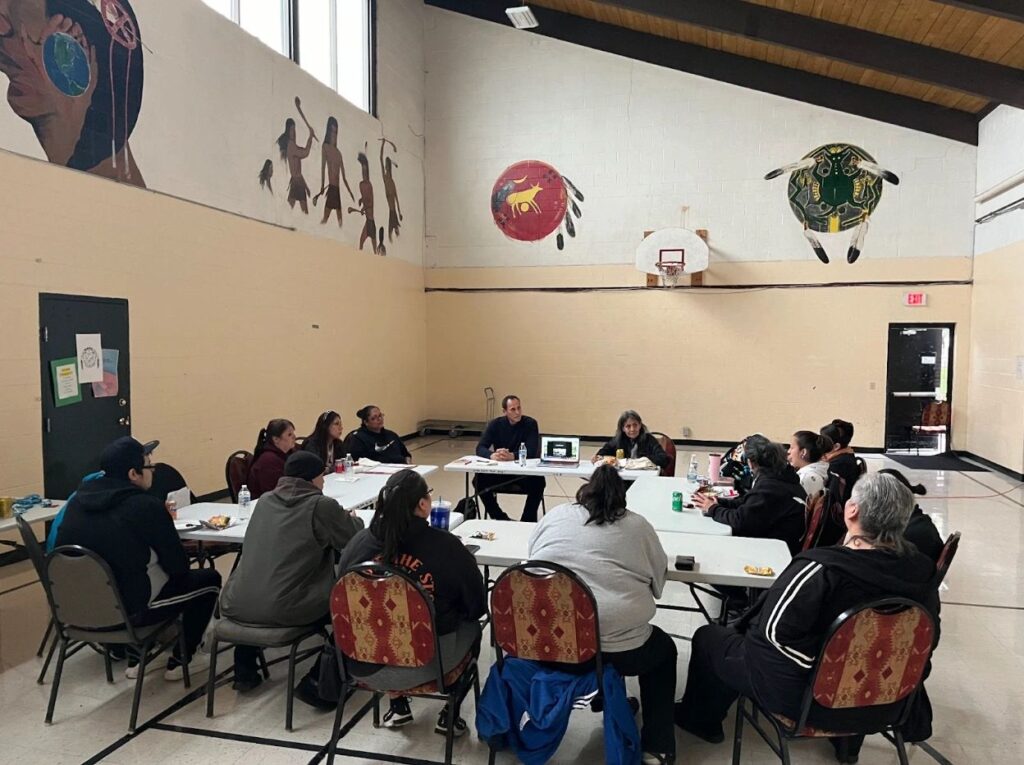
What people struggle to find is something much more specific: consistent, reliable information about what is happening close to home.
They want to know what was decided at the city council meeting.
Why property taxes increased.
What the heavy police presence near a school means.
What new development might change their neighborhood.
In other words, the gap is not a lack of news. It is a lack of relevant local information.
People fill those gaps however they can. They search Google. They scroll social media. They follow hyperlocal creators who livestream community meetings, post neighborhood updates, or translate policy debates into everyday language.
Many of these creators do not identify as journalists. But they are building loyal audiences because they provide information people find useful.
We also heard repeatedly that information spreads through personal networks — friends, relatives and neighbors sharing what they learn. A hyperlocal social channel with 10,000 or 20,000 followers can have a far wider reach once information begins circulating within communities.
For funders seeking to strengthen local information ecosystems, these behaviors offer important clues.
Within journalism circles, watchdog and solutions reporting are often emphasized as the path forward. Both are essential to a healthy democracy. But many residents we spoke with were asking for something even more basic: timely, understandable information about decisions affecting their daily lives.
They want information that reflects their communities and speaks directly to their lived experiences.
There is also the practical question of how local news is financed. Many media entrepreneurs we encountered are sustaining their work through personal sacrifice or unrelated full-time jobs. At the same time, many residents told us they cannot afford the growing number of paywalls surrounding professional journalism.
This is an area where philanthropy can play a catalytic role.
Media entrepreneurs often need guidance, capital and operational support during critical stages of growth. With the right investment, many could build durable institutions that serve communities currently overlooked by traditional models.

But earning financial support — whether philanthropic or consumer-based — ultimately requires demonstrating value to the people a news outlet hopes to serve.
Across the region, residents expressed similar priorities: consistent, reliable hyperlocal information they can trust and use.
Some voiced frustration with perceived bias in traditional outlets. Yet many also acknowledged that bias exists in the social media sources they now rely on. Rather than relying on a single authority, people increasingly consult multiple sources to form their own understanding.
Their shift away from traditional news outlets is not driven solely by ideology. It is driven by relevance, convenience and access.
For more than a century, legacy media served as the primary gatekeepers of information — deciding what stories were told and when audiences would encounter them. That gatekeeping power has eroded. Today, audiences play a far greater role in determining what information spreads and what conversations shape public life.
The lesson from the Great Lakes research is not that journalism is doomed.
It is that strengthening local information ecosystems requires starting from the same place audiences do: their everyday information needs.
The future of local news will not be secured simply by rebuilding legacy institutions. It will be shaped by those who understand that journalism’s true north is — and always has been — the public.