
Resources
Safety & Arrest Response Protocols for Journalists
February 3, 2026
1. Pre-Assignment Safety Planning
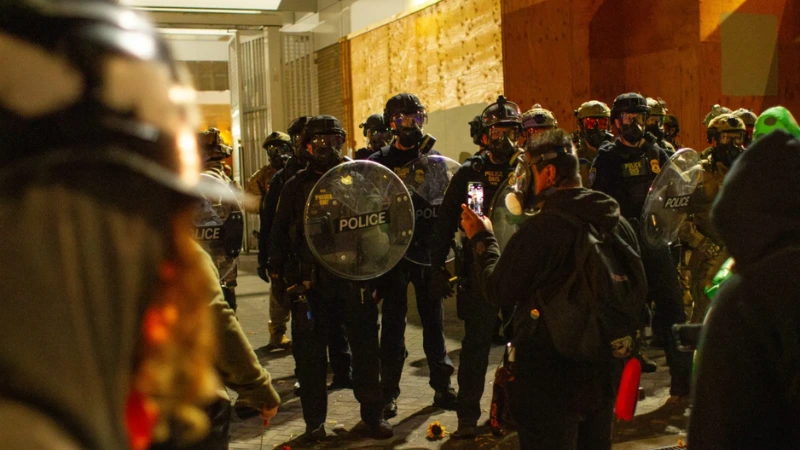
Before covering protests, court proceedings, policing, immigration enforcement, or other government actions:
- Risk assessment: Editors and reporters should discuss potential risks (arrest, equipment seizure, harassment, detention) before assignment.
- Credentials: Ensure journalists carry press credentials and understand that credentials do not guarantee protection.
- Emergency contacts: Reporters should share:
- A primary editor contact
- A legal contact
- An emergency personal contact
- Know Your Rights briefing: Journalists should be reminded of:
- Their right to remain silent
- Their right to an attorney
- What to do if asked to unlock phones, surrender equipment, or hand over footage
- Preemptive legal support (strongly encouraged):
Journalists—especially Black, brown, immigrant, freelance, and independent reporters—should be encouraged to contact the Reporters Committee for Freedom of the Press (RCFP)before going out on assignment if they have legal questions or concerns.- Email: projourn@rcfp.org (for legal needs ranging from prepublication review to contract questions)
- Hotline: 1-800-336-4243 (for urgent questions, including just before covering a protest)
2. If a Journalist Is Detained or Arrested
The newsroom should treat this as an emergency protocol, not a PR issue.
Immediate actions (first 30–60 minutes):
- Confirm the journalist’s location, status, and any charges (if known)
- Contact legal counsel immediately
- Notify senior editorial leadership
- Begin documenting the incident in real time (who detained them, where, when, and under what circumstances)
Do NOT:
- Ask the journalist to explain or justify their actions while detained
- Delay legal support to “see how it plays out”
- Treat the arrest as an individual problem rather than an institutional responsibility
3. Legal Response
- Maintain access to pre-identified legal counsel experienced in press freedom, protest law, and/or immigration law
- If internal counsel is unavailable, activate shared legal defense networks, including the Reporters Committee for Freedom of the Press
- Urgent legal hotline: 1-800-336-4243
- Email: projourn@rcfp.org
- Cover all reasonable legal costs related to the arrest or detention
- Ensure the journalist does not face retaliation or financial burden for asserting their rights
4. Public Response & Solidarity
Silence enables intimidation.
- Issue a timely public statement affirming:
- The journalist was reporting
- The newsroom stands behind their work
- The incident raises serious press freedom concerns
- Coordinate messaging with:
- Journalism organizations
- Peer outlets
- Press freedom groups
- Avoid language that distances the newsroom from the journalist (“pending review”) unless legally required
5. Internal Care & Protection
After release or resolution:
- Offer trauma-informed support (time off, counseling resources)
- Conduct a debrief focused on institutional learning, not individual blame
- Review whether safety protocols or legal preparedness need strengthening
- Ensure there is no chilling effect on future assignments—journalists should not be quietly sidelined
6. Industry Coordination
Publishers should not act alone.
- Participate in rapid-response coalitions that:
- Amplify arrests or detentions immediately
- Share legal resources and expertise
- Track patterns of intimidation across regions
- Share incident documentation (when safe) to help identify systemic targeting
- Commit to defending all journalists—especially Black, brown, immigrant, freelance, and community-based reporters—regardless of outlet size or status
7. Long-Term Preparedness
- Maintain an arrest-response checklist accessible to all staff
- Update protocols annually or after major incidents
- Train editors and reporters on safety and legal response as part of onboarding
- Treat attacks on journalists as threats to press freedom, not isolated disruptions
Key Legal Resource
Reporters Committee for Freedom of the Press
- Email: projourn@rcfp.org
- 24/7 Legal Hotline: 1-800-336-4243
Journalists are encouraged to contact RCFP before assignments and immediately if detained, questioned, or threatened.