
News
New Radio Campesina Hire Aims to Build Trust on Latino Airwaves
July 24, 2025
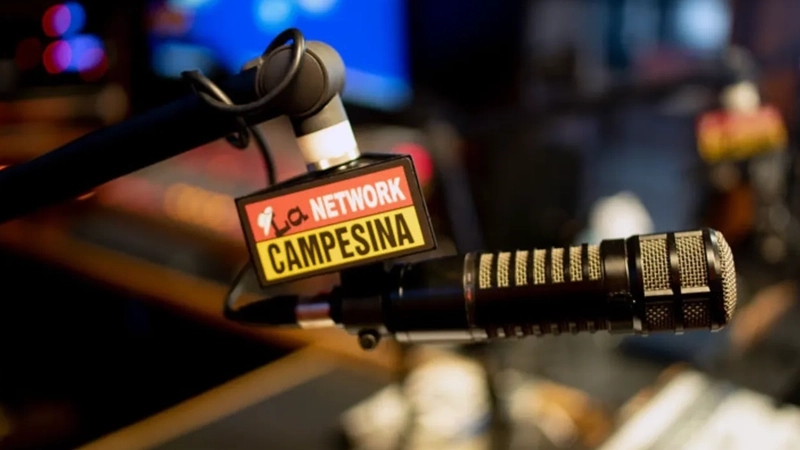
Supported by The Pivot Fund, this strategic hire strengthens Spanish-language journalism in Arizona—bringing credible local news to a medium long plagued by misinformation.
With dedicated support from The Pivot Fund, Radio Campesina has hired veteran journalist Ernesto Rodríguez—a milestone that marks a bold step forward in the station’s mission to deliver trusted, community-rooted journalism across Arizona.
Rodríguez, a seasoned multimedia journalist with over a decade of experience, brings sharp editorial instincts and deep cultural knowledge to the role. A communications major by training, he began as Sports Managing Editor at La Voz de la Frontera, Mexicali’s largest newspaper, where he oversaw daily sports coverage and print design. He later expanded into digital and broadcast formats, founding Punto Gamer and launching Updateando, a Spanish-language pop culture podcast network with more than 4,000 weekly downloads.

Now, Rodríguez is channeling his storytelling talents into local reporting that centers the lives, challenges, and contributions of immigrant and Latino communities in Arizona. His beat will cover critical issues like immigration, labor, housing, and education—topics he describes as “core to daily life and opportunity.”
“As a Latino journalist, I feel a deep personal responsibility to highlight the voices and challenges of immigrant communities,” Rodríguez said. “At Radio Campesina, we aim to go beyond information delivery. We want to build trust, foster civic awareness, and create a sense of belonging in a climate that often marginalizes our communities.”
This hire is part of The Pivot Fund’s strategic investment in Arizona’s local news ecosystem. In addition to backing Conecta Arizona, The Pivot Fund invested in Radio Campesina to deepen its impact statewide—ensuring that trusted messengers have the resources and support to tell the stories that matter most. With this investment, The Pivot Fund is also making a bold bet on expanding credible, high-quality journalism on Spanish-language radio—a crucial step in combating the spread of mis- and disinformation that too often circulates unchecked on airwaves.
As The New Yorker recently reported in “The Radio Station That Latino Voters Trust,” Radio Campesina plays a vital role in countering disinformation on Spanish-language airwaves and building civic trust in immigrant communities.
Radio Campesina is a proud Pivot Fund grantee and a powerful voice across California, Arizona, Nevada, and Georgia. Through seven radio stations and affiliated media properties—Chavez Digital Solutions, The Main Ticket, and Inspired Studios—the network reaches more than 7 million people with bilingual, community-powered content. Rooted in the legacy of César Chávez, the network has long served as both a cultural connector and civic amplifier, making sure that farmworkers, immigrants, and working-class Latino families are not only seen—but heard.
Rodríguez’s hiring represents the first time the network has had a reporter formally dedicated to covering local stories from within the Arizona community. As Maria Barquin, Network Program Director & Executive Producer for Chavez Media, noted, the position fills a long-standing gap.
“The impact we hope Ernesto will have, both in the short and long term, is to continue strengthening the trust of our audience and to allow us to better serve our community by addressing important local issues,” Barquin said.
The Pivot Fund’s role went beyond financial support. The team also advised on the structure of the position, provided guidance throughout the search process, and helped Radio Campesina identify the right candidate. It’s a hands-on model of philanthropy that centers community-led media and ensures local newsrooms are equipped with the talent and tools they need to lead.
“Being part of a community-rooted newsroom means having the chance to uplift the voices of my people.” Rodríguez said. “It’s an opportunity to share not only the struggles, but also the strength, creativity, and beauty of Latino culture.”
Rodríguez’s reporting will also work to counter misinformation and encourage civic participation, especially among immigrant audiences often overlooked by traditional and corporate outlets. In a media landscape where Latino communities are frequently misrepresented or ignored, his presence on the ground in Arizona reflects what’s possible when local media is empowered to lead.
“Investing in local, trusted reporters is important right now because thorough investigation and accurate reporting are essential,” Barquin said. “We need reporters who authentically represent and connect with the communities they cover—so audiences feel seen, supported, and well-informed.”
With Rodríguez now on board, Radio Campesina is poised to expand its reach and deepen its impact—one local story at a time.
“Telling these stories helps shift narratives,” Rodríguez said. “It shows that we are more than a labor force—we are families, leaders, and changemakers. Journalism that reflects this truth gives our community the recognition and dignity it deserves.”