
News
Without Legal Infrastructure, Local Accountability Reporting Breaks Down
April 8, 2026
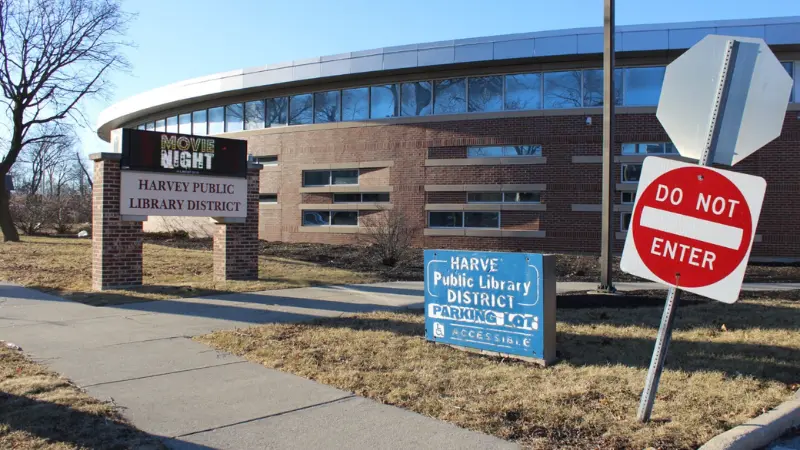
In Harvey, Illinois—just outside Chicago—accessing basic public records can require a lawsuit.
For Amethyst Davis, founder of the Harvey World Herald, that reality shapes what journalism is possible. In a place she describes as a “legal desert,” few attorneys are available to support accountability reporting, and many represent the very government entities she is trying to hold accountable.
“You should not have this many problems trying to get something as basic as a bills list or an invoice,” Davis said. “Harvey is one of those places where people have to wage the grandest of battles for the bare minimum.”
Efforts to close this gap have included the Racial Equity in Journalism Legal Fund, pioneered by Pivot Fund founder Tracie Powell. The fund provided legal defense support to newsrooms facing similar challenges as the Harvey World Herald and others serving rural and under-resourced communities. But that support ended earlier this year amid growing anti-DEI backlash, leaving many of these publishers without critical legal infrastructure once again.
When reporting requires litigation
The Harvey World Herald is the only local newsroom serving the historically underreported community of Harvey, a majority-Black, working-class suburb south of Chicago. It records government meetings that are not broadcast and creates a public record where none exists.
But even basic reporting comes with steep barriers. After requesting financial records from the Harvey Public Library District, the newsroom was forced to pursue litigation to access bills lists — records of payments made by a public agency, showing who was paid, how much, and for what purpose.
Access depends on proximity—and luck
The newsroom secured pro bono support from a Chicago-based civil rights law firm familiar with Harvey. That support has been critical.
But it’s not typical.
Many small-town and rural publishers lack access to legal expertise—or any viable options at all. Even in Harvey, conflicts of interest can quickly eliminate available counsel, leaving the newsroom back at square one.
What funders are missing
Much of the conversation around local news focuses on content, audience, and revenue. Davis’ experience points to a less visible gap: legal infrastructure.
Without it, public records go unchallenged and accountability reporting stalls.
“You’re trying to oversee growth and development,” Davis said, “and then you have to go to court over something as simple as a bills list.”
Why this matters
When legal barriers are overcome, the impact is immediate.
In one recent Harvey World Herald story, a resident tip led to reporting that triggered an investigation into a county commissioner receiving improper tax breaks—an issue that may have gone unnoticed without the newsroom’s persistence.
That tip surfaced because the community knew where to go.
Legal support exists—but access remains uneven
Efforts like the Local Legal Initiative from the Reporters Committee for Freedom of the Press aim to address this gap by providing free legal support to local newsrooms in 10 states— Colorado, Indiana, Louisiana, Michigan, Minnesota, Mississippi, Oklahoma, Oregon, Pennsylvania and Tennessee. The program offers critical services—from helping journalists access public records to reviewing stories and defending against legal threats—making it easier for newsrooms to pursue accountability reporting.
It’s a meaningful step toward building the kind of legal infrastructure local journalism needs.
But access remains uneven. The initiative currently operates in a limited number of states, leaving many publishers—especially those in small-town, suburban, and rural communities—without consistent legal support. For newsrooms like the Harvey World Herald, where legal barriers are a routine part of reporting, that gap remains a significant challenge.
The takeaway
While there are promising efforts underway—like the Local Legal Initiative—significant gaps in access to legal support persist, especially for community-rooted and under-resourced newsrooms.
Expanding these efforts—and reviving models like the Racial Equity in Journalism Legal Fund, will be critical to ensuring local publishers have the legal infrastructure needed to pursue accountability reporting.