
News
Why Print Still Matters for Community and Immigrant-Serving Newsrooms
February 11, 2026
Print isn’t dead. For many communities, it’s infrastructure.
In the digital-first era, print is often framed as a platform newsrooms should move away from. But for many community-rooted and immigrant-serving outlets, print is central to their mission. It’s tied to how trust is built and it’s key for helping people access vital information, and the resources they need to participate civically in their communities.
“Print isn’t just a product—it’s how people navigate resources, services, and civic life,” said Erika Carlos of El Tecolote…“We don’t keep print because it’s cheap. We keep it because it matters to our community. Because it matters, we find a way.”
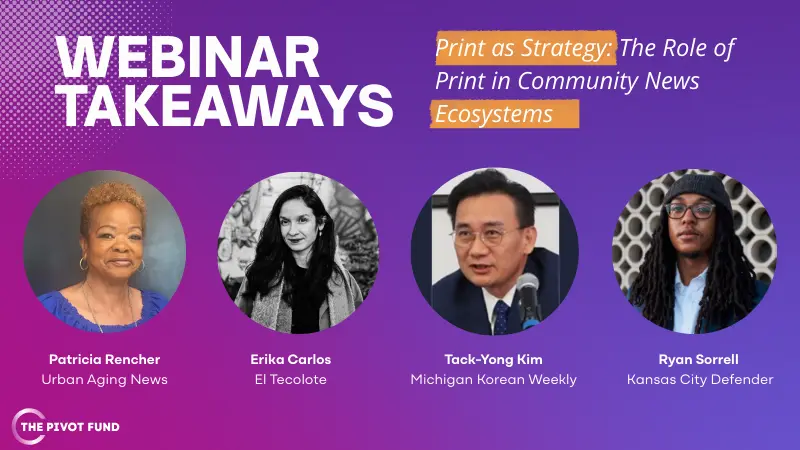
During a recent Pivot Fund webinar, “Print as Strategy: The Role of Print in Community News Ecosystems,” publishers said they considered print to be a strategic tool for access, safety, and sustainability—especially as digital spaces become more volatile, surveilled, or unreliable.
Key takeaways
1) Print as a tool for community celebration
Webinar panelists emphasized that print works because it’s embedded in daily life—picked up at grocery stores, churches, and community hubs. It’s tangible, shareable, and often more accessible. It’s also a powerful way to celebrate community culture and identity.
Ryan Sorrell, founder and publisher of the Kansas City Defender, said they’re planning to launch a new print product. RADAR, is an arts and culture magazine spotlighting Black creators in Kansas City—from nail technicians and visual artists to musicians and digital creators. Designed as a high-quality, tangible artifact, RADAR treats print as both validation and visibility, offering creators lasting recognition and new opportunities for sponsorship and community-aligned advertising.
The project reflects a broader trend discussed during the webinar: using print selectively for products that carry cultural weight and long-term value.
2) Print can support safer, more intentional circulation
Print isn’t only about access—it can also be about protection. Tack-Yong Kim, publisher of the Michigan Korean Weekly said some sensitive community information feels too exposed online, where it can be widely shared or monitored. In those moments, print can limit circulation to trusted community spaces.
“Print lets me share information with my community without exposing it to everyone else,” Kim said.
Carlos, executive editor of El Tecolote, added that when online spaces feel risky, print works best when it’s paired with real-world connection. Distributing print at events or through in-person conversations helps audiences understand the source and context of the information and decide if it’s safe to trust.
3) Print becomes “civic infrastructure” when it’s built for utility
Publishers who treat print as something people can use, not just as something they read, have seen high-engagement results. For example, Sorrell shared how The Kansas City Defender included a print edition in free food boxes distributed through the Hamer Free Food Program. The product offered practical information about local Black farmers designed to be an evergreen community resource.
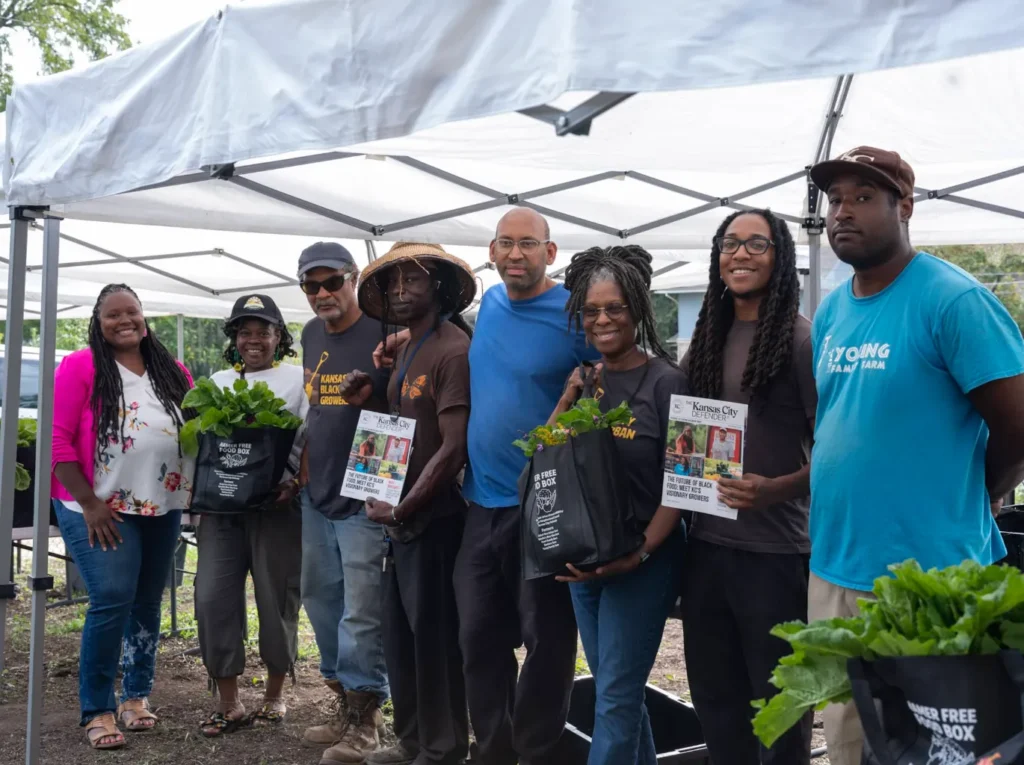
“We have to think about how journalism can be embedded directly into community care to serve our communities best,” Sorrell said.
4) Print creates dignity, community belonging
Digital platforms reward speed and scale. Print slows the process down—allowing for deliberate choices about language, framing, design, and audience. Kim described print as a hands-on tool for community engagement and language learning. His newspaper is a tool in community language schools and allows readers to see themselves reflected on the page.
Patricia Rencher, publisher of Urban Aging News, shared how the outlet uses print to actively challenge ageism, choosing language that reshapes how people understand aging rather than reinforcing stereotypes. And Sorrell emphasized that print remains essential for reaching people without reliable phones or internet access—particularly unhoused neighbors—making it a critical access point when digital channels fail or exclude.
5) Sustainability works best when print has a clear job in a hybrid model
Print is expensive, and panelists didn’t dismiss that reality. The shared lesson: print becomes more viable when it’s used for high-value products, targeted distribution, and clear audience purpose. Kim noted advertisers often still pay more for print. Sorrell emphasized printing selectively. Carlos shared how El Tecolote is diversifying revenue—advertising, exploring sponsored editions, and building membership to help offset print costs.
“Even before philanthropic money was around we have been so innovative with our revenue models like our first edition was funded via a talent show,” Carlos said…”Community newsrooms that serve communities of color they never had a choice but to print, but to use the best methods to reach their communities because otherwise nobody else is serving them, so we will find a way.”
The throughline across speakers was simple: print is a durable channel for trust, access, and connection—especially when digital spaces are unstable, unavailable or risky. When treated as civic infrastructure and integrated thoughtfully into hybrid strategies, print remains a powerful part of a sustainable future for community-rooted journalism.