
Analysis
Enlace Latino NC’s Service Journalism Builds Trust, Partnerships
June 3, 2025
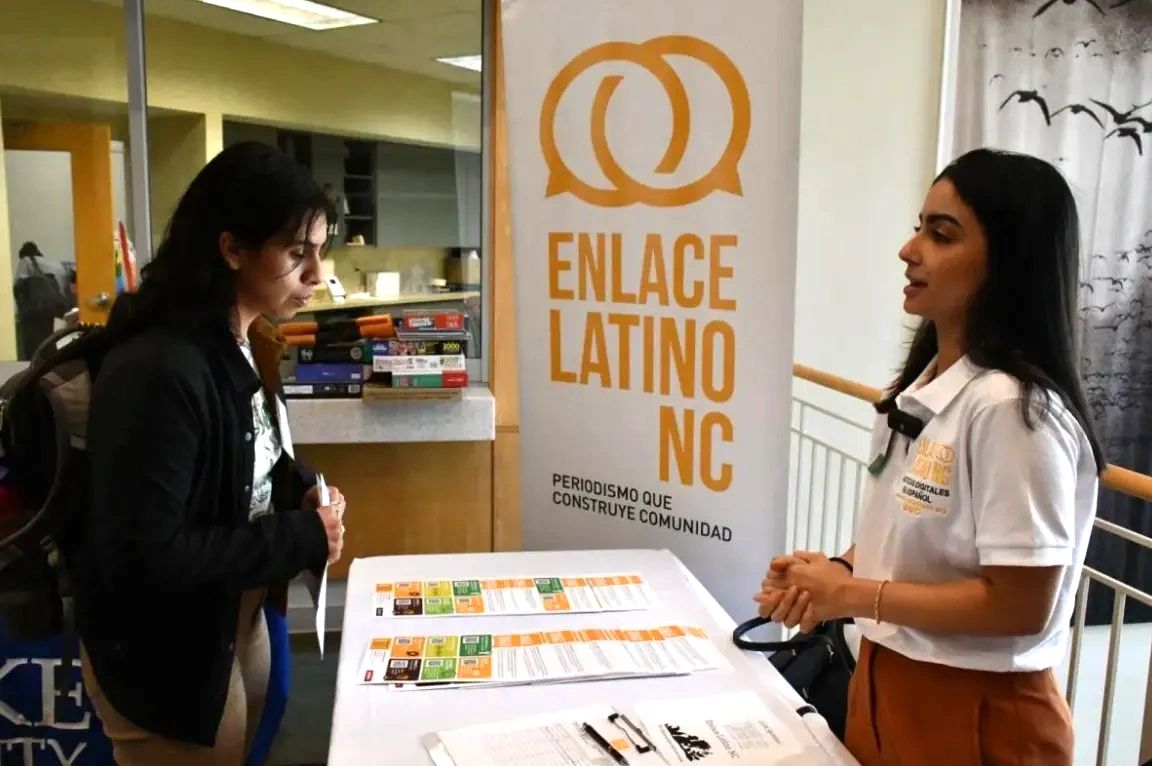
At Enlace Latino NC, journalism isn’t just information—it’s infrastructure. And for funders looking to support journalism that delivers real-world results, their model offers a powerful example.
This North Carolina-based, nonprofit newsroom has been serving the state’s Spanish-speaking immigrant communities since 2018 with deeply reported, culturally competent public service journalism. Its latest resource— a Spanish-language immigration guide —is more than a digital product. It’s a lifeline.
What makes it work? It wasn’t built in a newsroom. It was built in community.
The mobile-first guide offers clear, actionable responses to urgent questions:
- What to do if ICE shows up
- How to make a family safety plan
- Where to access legal and mental health support
- How to avoid misinformation
This guide wasn’t created in isolation. It was shaped through WhatsApp chats, SMS campaigns, community forums, newsletters, and direct feedback from impacted families. It’s journalism designed with and for its audience.
“Community engagement is at the core of everything we do,” said Enlace Latino NC Co-founder and Executive Director Paola Jaramillo. “Our goal is simple but powerful: to build two-way communication with North Carolina’s Latino community and use that relationship to guide every aspect of our journalism.”
What Funders Can Learn
This is service journalism at its most effective—and most scalable. It’s also a sustainability strategy.
By turning their reporting into evergreen tools—on immigration, elections, disaster recovery, agricultural workers’ rights, and Medicaid expansion—Enlace Latino NC strengthens civic literacy, builds trust, and forms partnerships with legal aid organizations and immigrant advocacy groups.
These resources don’t just inform—they empower. And that empowerment pays dividends:
- Stronger community trust and loyalty
- Cross-sector collaboration and visibility
- A clear, fundable model of journalism as public service
What This Means for Philanthropy
Funders often ask how journalism can be more impactful, trusted, and connected to underserved communities. This is what it looks like in practice:
- Trust is the ROI: Guides like Enlace’s don’t generate direct revenue—but they generate credibility, relevance, and resilience.
- Infrastructure over headlines: The newsroom isn’t chasing clicks—it’s building tools people can use in real life, in real time.
- Scalable strategy: The approach—listen first, build second—is replicable across geographies and issue areas.
“We’ve become more than a publisher,” says Jaramillo. “We’re a source of real, actionable help—and our community knows it.”
How to Support This Work
Funders can help newsrooms like Enlace Latino NC deepen their impact and scale their service-driven work by:
- Providing general operating support, not just project grants
- Investing in audience engagement infrastructure—from SMS tools to community liaisons
- Supporting content-to-tool pipelines, turning reporting into guides, explainer series, and resource hubs
- Valuing trust and relevance as core impact metrics, alongside audience size
Enlace Latino NC’s work isn’t just good journalism—it’s essential infrastructure for information equity. In a media landscape where trust is scarce and communities are underserved, this model shows how journalism can deliver solutions, not just stories.