
News
How a Cuban exile news site used AI to become “Public Enemy #1
September 23, 2024
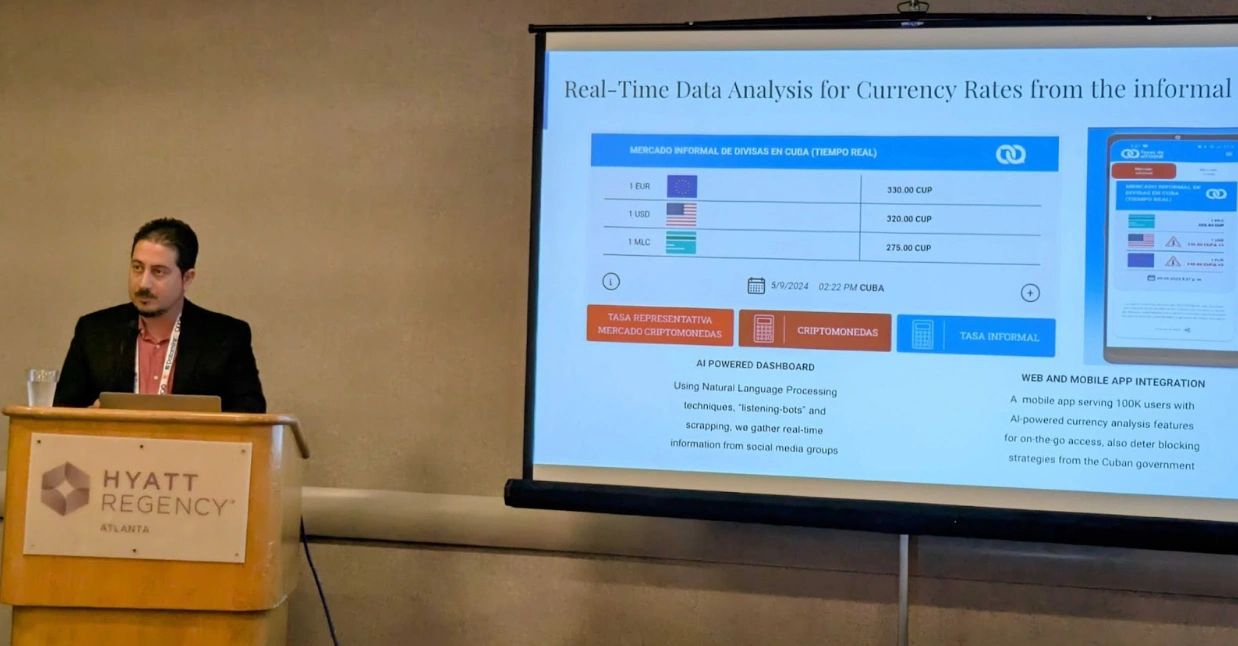
At last week’s Online News Association conference in Atlanta, small news publishers showcased how they’re using artificial intelligence (AI) to solve real-world challenges. It was clear that innovation often blooms in the face of adversity, and no example stood out more than that of El Toque—a news outlet that’s weathered extraordinary difficulties to deliver essential tools to its audience.
El Toque began in Cuba in 2016, but government repression forced its founders into exile. Even in the face of that crackdown, they continued to innovate. Last year, they built an AI-powered currency converter that’s become the default exchange-rate tool in Cuba. In a country where the official peso value is far out of sync with what dollars or euros fetch on the black market, El Toque’s tool helps people navigate the volatile economic landscape in real time.
During a panel hosted by The Pivot Fund, El Toque editor José Nieves joined Vania André from The Haitian Times and Paris Brown from The Baltimore Times to share how their newsrooms are using AI to offload routine tasks and tackle bigger-picture work. But El Toque’s story stood out because it didn’t just stop at streamlining newsroom operations—its AI tool is actively meeting a critical need for millions of Cubans.
To build the converter, El Toque created bots that scour messaging apps, social media, and websites where traders post buy-and-sell offers. AI then processes this data to calculate unofficial exchange rates. By mid-2024, the site was drawing over a million users each month, with 100,000 downloads of the app. The tool had become a staple in everyday life—when someone pays in dollars at a restaurant, for instance, the server pulls up El Toque’s converter alongside the bill.
But El Toque isn’t stopping there. They’ve also launched a Cuban legal database, scanning thousands of PDF documents and using AI to make them searchable. Plus, they’ve hired lawyers to train AI bots to answer common legal questions. This is journalism stretching far beyond the traditional article format, providing real, practical tools for the communities they serve—and growing audience and revenue in the process.
Of course, the Cuban government wasn’t happy about El Toque’s work. The informal exchange rate, which paints a truer picture of the peso’s value, is much lower than the official one, and the government didn’t appreciate the visibility El Toque was giving it. As a result, El Toque is now being scapegoated for Cuba’s runaway inflation and depreciating currency. In June, Nieves received a WhatsApp message showing his house in Miami—a threat he believes came from Cuban security forces.
Yet, despite the pressure, El Toque’s app hasn’t been blocked in Cuba. “I think even the government officials need our service,” Nieves said, highlighting the irony of the situation.
And the innovation doesn’t stop there. El Toque is now working on an AI-powered chatbot designed to combat disinformation in Spanish-speaking communities, in partnership with Factchequeado. Like so many of the newsrooms we support, El Toque proves that adversity isn’t just a challenge—it’s a catalyst for creating tools that genuinely serve communities.