
News
El Tecolote: A Story of Journalism Rooted in Community
December 4, 2024
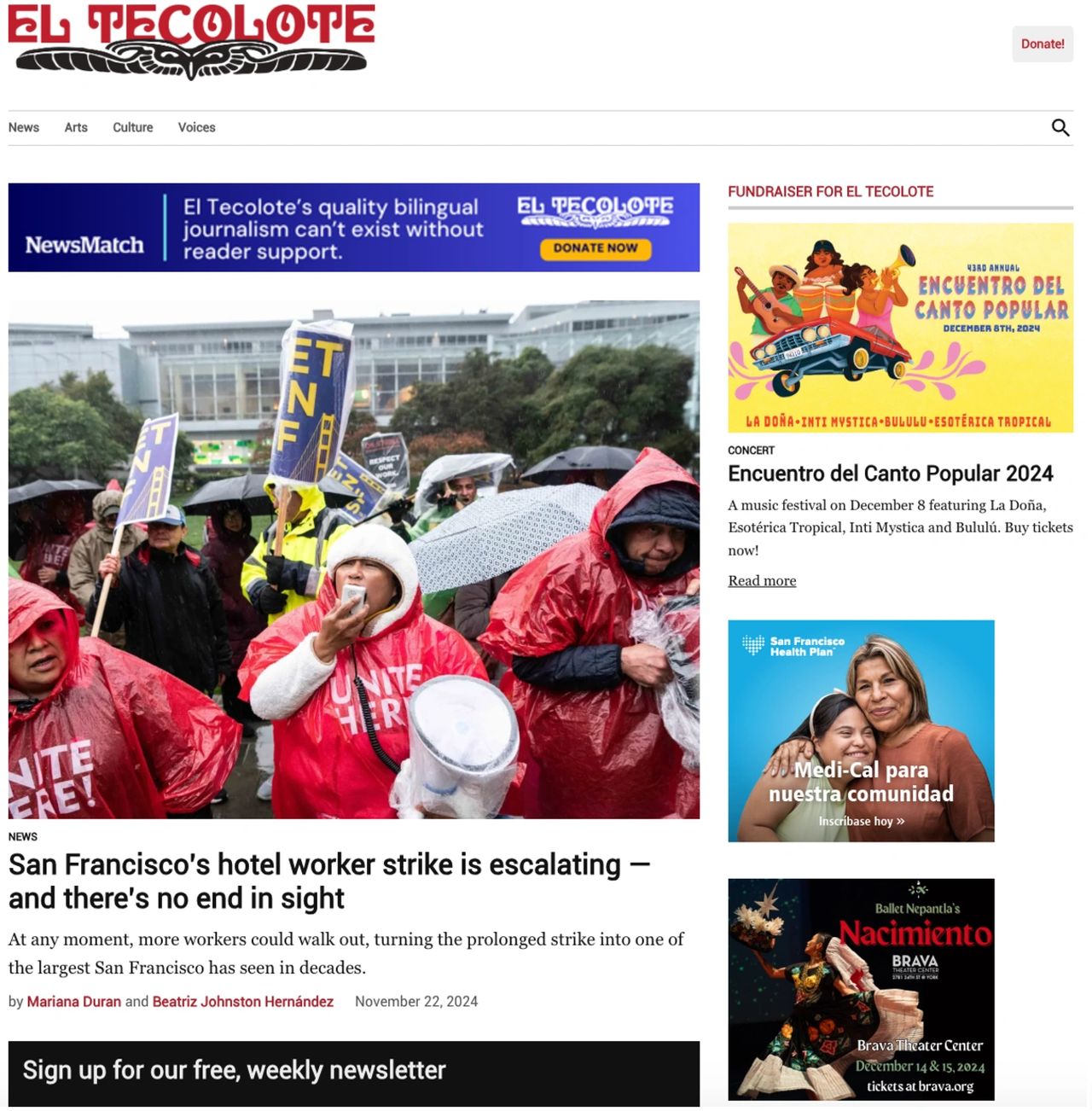
In today’s world, journalism isn’t just about telling stories—it’s about building trust, creating lasting connections, and standing up for the communities we serve. No one knows this better than El Tecolote, a bilingual newspaper that’s been part of San Francisco’s Mission District for over 50 years. They’ve made it their mission to offer more than just news—they’re amplifying the voices of their readers, staying deeply rooted in their community, and ensuring that every story is told with respect and dignity.
As Editor Erika Carlos puts it, “We’re not here to parachute in or impose narratives. We’re here to amplify the voices already part of our neighborhoods.” This isn’t just a catchy slogan—it’s a guiding principle that shapes every aspect of their journalism. El Tecolote has shown us that when you listen to your community and show up consistently, you build more than just an audience—you build trust.
Why This Matters More Than Ever
In light of recent findings from the International Women’s Media Foundation (IWMF) about the alarming rise in threats against journalists, El Tecolote’s approach shows us that community-driven journalism isn’t just a good practice—it’s a lifeline. In a time when journalists are increasingly under attack—facing physical violence and digital threats—it’s clear that the work you’re doing has never been more critical.
How They Do It: Thoughtful Language and Cultural Competence
At El Tecolote, language is power. Simple things like calling someone an “RV resident” instead of an “RV dweller” send a message of respect. It’s about framing stories that reflect the values and dignity of the people you report on. This attention to detail is what makes their journalism not just informative but empowering for their readers.
Going Beyond Storytelling: Community Partnerships
But it’s not just about words—it’s about action. El Tecolote doesn’t just report on events in the Mission District—they participate in them. From collaborating with local nonprofits to getting involved in cultural celebrations like Día de los Muertos, they show up for their community in ways that go beyond the newsroom.
By creating these meaningful partnerships, El Tecolote fosters a deep connection with its readers, something that’s essential for any BIPOC-led newsroom. Whether it’s a photo essay with local youth or amplifying the voices of community organizations, these efforts help create a newsroom that’s truly integrated into the community it serves.
A Blueprint for BIPOC-Led Journalism: Key Steps Inspired by El Tecolote
- Be Intentional in Your Reporting: Focus on stories that matter to your community. Build long-term coverage on issues like housing, education, or health. Example: Dedicate regular stories to a local issue, showing an ongoing commitment.
- Listen to Your Audience: Engage with your community through surveys, town halls, or social media feedback. Example: Hold regular virtual check-ins to capture community concerns.
- Reflect and Evolve: Regularly assess your coverage to ensure you’re being inclusive and avoiding biases. Example: Identify and amplify voices that are often missing, such as youth or immigrant communities.
- Build Relationships: Strengthen ties by being present at local events and following up on ongoing stories. Example: Feature a long-term story on a local nonprofit’s efforts.
- Show Up for Your Community: Support and participate in local events to build trust. Example: Attend and cover cultural events to demonstrate your newsroom’s investment in the community.
By applying these steps, you can start building a more trusting, engaged relationship with your community—just like El Tecolote has done for over five decades.