
News
Community Media Is Turning to Faith Communities for Support
March 11, 2026

As federal support for the social safety nets shrinks and funders are stretched thin, many community newsrooms are looking for sustainable partners closer to home.
One place they are increasingly finding support: faith communities.
Across the country, community-rooted outlets are building relationships with churches and other faith institutions — not only for financial support, but also for distribution, civic engagement and community programming. For outlets serving historically marginalized communities, these partnerships often reflect long-standing institutional ties.
A Historic Connection
The relationship between community journalism and faith institutions runs deep.
The first Black newspaper in the United States, Freedom’s Journal, was founded in 1827 within networks connected to Black churches and abolitionist organizing. Churches often provided the community infrastructure, printing resources, and audience networks that made early Black publications possible.
That connection continues today.
For Ryan Sorrell of The Kansas City Defender, building relationships with churches was both strategic and historical. Sorrell identified two key audiences within the faith community: older Black congregations where civic engagement remains strong, and progressive white churches where many members are involved in racial justice and social justice work.
Both have become meaningful partners for The Kansas City Defender.
Financial Support and Mutual Aid
Some partnerships have translated directly into funding. One Catholic institution contributed $10,000 to support the Defender’s work, while a Presbyterian church donated about $5,000 as part of its annual program to fund local nonprofits.
Churches have also supported the Defender’s mutual aid programs, including donations for its free clothing program and assistance with food distribution.
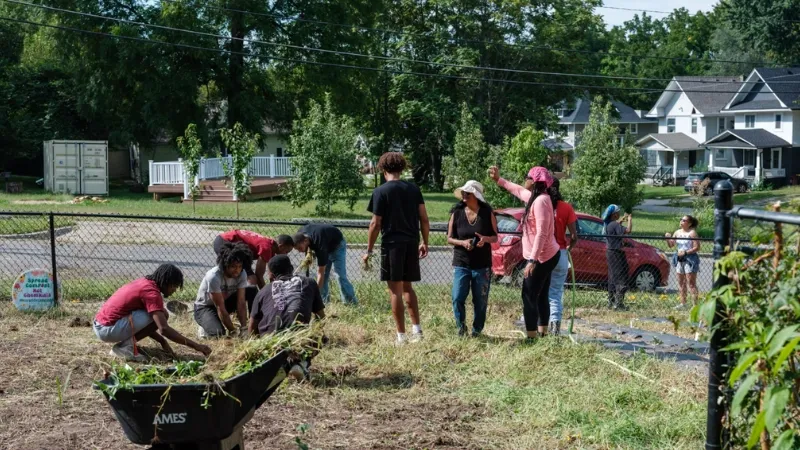
These collaborations work because both institutions operate within the same civic ecosystem.
“A lot of progressive churches are trying to find ways to be impactful with people who are most marginalized,” Sorrell said. “We’re already directly connected to those communities.”
Access to Trusted Networks
Faith partnerships can also help newsrooms reach audiences that traditional media distribution often misses.
Churches provide trusted community networks where information travels quickly and credibility is already established. Sorrell has spoken at congregations about the history of the Black press and the role of journalism in civic life, including a recent Black History Month presentation that doubled as a sermon about the radical history of Black newspapers.
For outlets exploring print distribution, churches also offer valuable physical spaces. Older audiences who remain active in church life are often more likely to engage with print publications than digital-only news.
Support Beyond Funding
Not every partnership with faith communities is financial.
At Conecta Arizona, founder Maritza L. Félix says churches and faith groups help the newsroom connect with people and resources that make deeper reporting possible.
“We work very quietly with churches and faith groups to combat political violence and get resources and information from the community,” Félix said. “We do not get money from them, but they’re very powerful, and we get access to people and resources that otherwise we couldn’t.
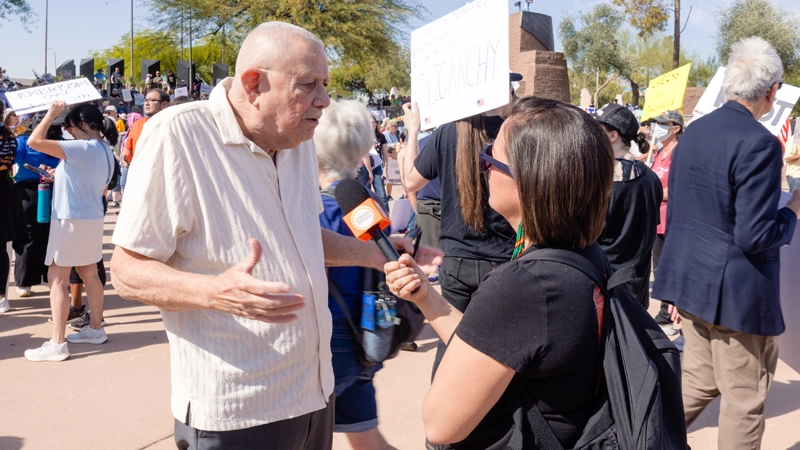
In border communities shaped by immigration enforcement and political tensions, faith institutions often serve as trusted spaces where journalists can build relationships and connect with sources. Those connections help Conecta Arizona access community knowledge, resources and firsthand experiences that lead to more powerful and accurate storytelling.
Starting the Relationship
For newsrooms interested in building similar partnerships, Sorrell says the first step is simple: start the conversation.
Early on, he created a spreadsheet of churches in Kansas City that mentioned racial justice, LGBTQ inclusion, or social justice programming and began reaching out to introduce the Defender’s work.
From there, partnerships developed organically.
“I don’t think any two relationships look exactly the same,” he said. “Sometimes it’s financial support. Sometimes it’s a speaking engagement. Sometimes it’s collaborating on a community initiative.”
Community Infrastructure for Journalism
At a moment when journalism funding is increasingly uncertain, faith partnerships offer something deeper than a short-term fundraising strategy.
They reflect a broader shift toward building sustainability through local civic infrastructure—institutions where trust already exists.
Faith communities have long served as hubs for organizing, mutual aid, and civic participation. For community-rooted journalism, they can also serve as powerful allies in strengthening local information ecosystems.
When values align, partnerships between faith communities and community media can help sustain both the flow of information and the communities that depend on it.