
News
Black History Month Begins With a Familiar Repression of the Black Press
February 4, 2026
Black History Month often arrives wrapped in celebration—progress, perseverance, firsts. But this year, it begins with a sobering reminder that some of the most dangerous chapters of U.S. history are not behind us. They are repeating.
Last Thursday, Black journalists Don Lemon and Georgia Fort were arrested for doing their jobs. The charges—widely viewed as flimsy and initially unable to withstand judicial scrutiny—appear less about securing convictions and more about sending a message. History tells us exactly what that message is meant to do: intimidate, exhaust, and chill speech.
For Black journalists—and for those who support community-led news—this moment feels unsettlingly familiar.
What is happening today is not new. It is part of a long and violent pattern in American history in which the Black press has been targeted not only through law and surveillance, but through physical destruction and lethal force.
Black newspapers were burned down.
Black printing presses were destroyed.
Black journalists were threatened, attacked, and killed for reporting the truth.
These were not accidents of history. They were deliberate acts meant to silence Black communities by destroying the institutions that informed them.
Throughout the 19th and 20th centuries, Black newspapers that exposed racial violence, voter suppression, labor exploitation, and state hypocrisy were met with mob attacks and official indifference. Newsrooms were torched. Editors were forced into exile. Some never lived to publish again.
During World War I, the Wilson administration used the Espionage Act of 1917 and the Sedition Act of 1918 to suppress Black newspapers that criticized the war or highlighted the contradiction of fighting for democracy abroad while denying it at home. Postmaster General Albert S. Burleson weaponized the postal system, revoking mailing privileges for Black publications deemed “disloyal.”
The Messenger, co-founded by A. Philip Randolph and Chandler Owen, was labeled by the federal government as “the most dangerous Negro publication” in America and placed under surveillance. The Chicago Defender—one of the most influential Black newspapers in U.S. history—was routinely blocked from Southern mail routes with federal approval, a calculated effort to cut off its reach without banning it outright.
That same playbook reappeared during World War II. The Roosevelt administration targeted the Black press for its “Double V” campaign—victory against fascism abroad and racism at home. FBI Director J. Edgar Hoover considered sedition charges against Black editors. Federal agents visited newsrooms to intimidate journalists. Black publications were restricted or banned from military bases. Even The Crisis, the NAACP’s magazine led by W.E.B. Du Bois, was placed under surveillance and forced to submit content to legal review after government intervention.
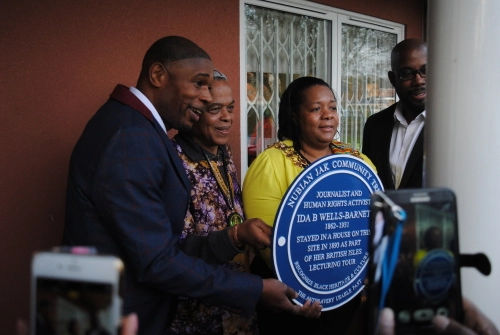
And although she was recognized posthumously with a citation from the Pulitzer Board for her coverage of lynchings, threats of violence during her lifetime drove Ida B. Wells out of Memphis.
By the Civil Rights era, repression was more covert but no less aggressive. Through COINTELPRO, the FBI sought to “discredit, disrupt, and destroy” Black writers, journalists, and media outlets. More than 50 Black writers were surveilled—not because their reporting was inaccurate, but because it was effective.
Seen in this historical context, the arrests of Don Lemon and Georgia Fort are not isolated incidents. They are contemporary expressions of an old strategy: use the machinery of the state not to win in court, but to instill fear; not to correct journalism, but to deter it.
We have also seen a recent blueprint for how far this strategy can go.
The detainment—and ultimate deportation—of journalist Mario Guevara sent a chilling signal. His case demonstrated how easily immigration enforcement, detention, and removal could be used as tools of intimidation against a journalist of color, and how limited the industry’s sustained response could be once the initial news cycle passed.
That moment mattered. It showed an administration how much backlash it would—or would not—face. It revealed a painful truth that many Black and brown journalists already know: the broader journalism industry has not always treated attacks on them as attacks on press freedom itself.
Even before her arrest, the viability of Fort’s BLCK Press was threatened economically. Last year, her largest advertiser—Target—dropped her even though she had exceeded their advertising goals.
The flurry of statements that followed last Thursday’s arrests—from journalism organizations and newsrooms—was important. Public solidarity matters. It raises the cost of repression. But statements alone are not enough. History shows us that repression thrives when responses are temporary, fragmented, or unevenly applied.
And that matters—because the historic Black press also leaves us with lessons.
Black journalists before us expected retaliation and planned for it. They understood that state attention often meant their reporting was landing where it hurt. They built alternative distribution networks when the mail was cut off (much like today’s immigrant-serving newsrooms are now taking their critical content underground and off social media platforms and websites). They leaned on community support when institutions turned hostile. They documented harassment so it could not be erased or denied later.
They also rejected the myth that neutrality would protect them. The Black press was never “objective” in the way power defines it—it was honest. It named racism plainly. It refused false balance. It understood journalism as a form of civic infrastructure, not just content production.
Perhaps most importantly, the Black press never allowed repression to isolate its journalists. Surveillance and intimidation are most effective when targets feel alone. The counter then—and now—is solidarity, visibility, and collaboration.
So the irony of this moment is sharp, but it is also clarifying.
Black History Month does not begin this year with a celebration of how far we’ve come. It begins with a reminder of what has always been at stake when Black journalists tell the truth—and why that work remains indispensable.
The state has tried before to silence the Black press.
It failed before.
And it will fail again—if we remember our history, protect one another, and refuse to confuse intimidation with inevitability.