
Analysis
Accountability Requires Infrastructure: What Funders Can Learn From Minnesota
January 30, 2026
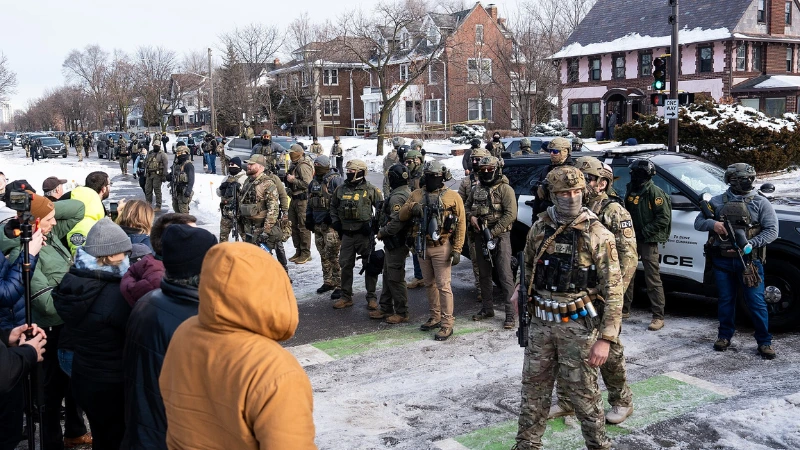
What’s unfolding in Minneapolis and across the state shows why communities need trusted journalism systems in place before a crisis hits.
The first casualty of war is the truth — unless truthtellers are on the ground.
In Minnesota, they are. And they are reporting what they see.
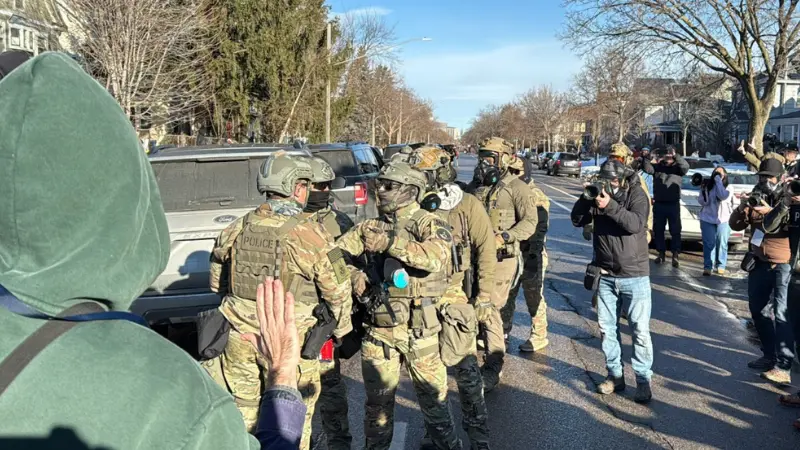
Over the past month of federal immigration enforcement operations in Minneapolis, St. Paul, and across the state, independent journalists, community media outlets, freelancers, legal observers, organizers, and residents have documented what is happening. Through video, livestreams, and firsthand reporting, they have created a public record that surfaces critical details, challenges official accounts, and debunks false narratives.
We saw it with the killings of Renee Good and Alex Pretti. And we have seen it repeatedly as eyewitness documentation contradicts claims made by federal authorities.
This work did not emerge by accident. It exists because Minnesota has a decentralized network of community-rooted journalists and documentarians embedded in their communities. They are trusted, present, and prepared to record what happens when power moves quickly.
At The Pivot Fund, this is the work we are focused on strengthening: independent, community-rooted journalism infrastructure that does not disappear when newsrooms are understaffed, under-resourced, or shut out.
What Minnesota illustrates is a reality Pivot grantee partners across the country describe every day. Accountability depends on whether communities already have trusted information networks in place before a crisis hits.
When a crisis happens and actions unfold rapidly, the first draft of the public record is increasingly created by local networks of independent journalists, community media outlets, and everyday residents with phones and video cameras.
This documentation does not replace journalism. It expands what journalism can verify, investigate, and preserve.
But only if infrastructure exists to support it.
Press Freedom Under Pressure: The Georgia Fort Case
The arrests of independent journalists Georgia Fort and Don Lemon while covering a protest in Minnesota underscore how fragile press freedom has become.
Fort, the founder of BLCK Press, is a trusted information steward in the Minneapolis–St. Paul community. Her arrest was not just an attack on one journalist. It threatened the health of the entire local news ecosystem.
“It is not new in America to see attacks on Black journalists,” Fort said after her release from federal custody during an interview with Rachel Maddow. “In the last few years, we’ve seen an exodus of not just Black journalists, but journalists in general from mainstream media. … There’s been a strategic attack on the free press for quite some time. But recently, it is intensifying. And I would say that the arrest of myself and Don Lemon is a new level — to threaten taking someone’s freedom away from them, for simply doing their job, to try and criminalize journalism. Journalism is not a crime. … Attacking the press is not simply just attacking journalists. It’s attacking the public’s right to know. … I do believe that this is an information war.”

In Fort’s first statement following her release from federal custody, she posed a question that still hangs over this moment: “Do we have a Constitution?”
Community members and a broad coalition of First Amendment defenders mobilized quickly. Within hours of her arrest, a large group of supporters gathered and demanded her release at a news conference in Minneapolis City Hall, across the street from the federal courthouse.
Rod Adams, founder and executive director of the New Justice Project, praised Fort and warned: “You can lock up a truth-teller, but you can’t lock up the truth. … The first sign of a crumbling democracy is an attack on free speech.”
Jaylani Hussein, executive director of CAIR-MN, wrote: “History teaches us that injustice thrives in silence, and freedom advances when truth is spoken boldly. … To defend journalism is to defend freedom. To support Georgia Fort is to stand on the right side of history.”
Historian Dr. Yohuru Williams added: “The pursuit of truth is not a crime, bearing witness is not incitement, asking questions is not obstruction. It is the work of an independent press. It is the foundation of democracy.”
Fort’s lawyer called the charges “a transparent and unconstitutional attempt by our federal government to intimidate journalists and chill their protected speech.”
Legal reporter Quinta Jurecic wrote about the case in The Atlantic and condemned the indictment: “This prosecution is best understood not as law enforcement but as propaganda, junk intended purely to get attention. But that doesn’t mean it isn’t dangerous.”
Despite the federal case, Fort remains focused on her work.
“This is something I think that probably would silence a lot of journalists,” she said. “I’m committed to continuing to tell the stories.”
The Power of the Public Record
Two recent cases demonstrate why community documentation matters.
Alex Pretti’s death shows how quickly official narratives can collapse when video evidence exists.
Pretti was killed during an ICE enforcement operation and initially described by federal officials as a “domestic terrorist.” But the bystander video told a different story. Multiple recordings show Pretti holding a phone, helping a woman who had been pushed by an agent, before he was pepper-sprayed, taken to the ground, and shot multiple times.
Video contradicted official claims before they could harden into fact.
The same dynamic unfolded after the killing of Renee Good. Eyewitness video raised questions about official accounts, prompting demands for accountability.
A few days after Good’s death, Georgia Fort hosted a private media briefing to share eyewitness graphic footage with major outlets, while withholding public release until the family consented. It was a trauma-informed editorial decision that preserved both dignity and evidence.
“It’s important for the facts of what happened to Renee Good to be portrayed accurately by all media outlets,” Fort told The Pivot Fund. “As a result of our media briefing EMS released their report shortly after which gave key insight that informed nationwide coverage.”
The footage was reportedly provided anonymously out of fear and raised new questions about what happened after Good’s death.
“As a practitioner of trauma-informed journalism, we believe that some footage and photos that are highly sensitive or graphic require consent of family. This is not the assumption or posture of mainstream media. We aim to change that, and that’s why this media briefing was so essential. To demonstrate that even as a small outlet that is trying to grow our audience and our revenue, we can make an empathetic decision to not exploit death for profit. To not exploit death for clickbait. We hope our leadership inspires newsroom leaders to be more considerate in the way they cover trauma through news.”
-Georgia Fort, Founder, BLCK Press
Soon after, another incident drew attention when multiple videos showed ICE agents pulling a woman from her vehicle as she repeatedly yelled that she was disabled.
The statement from federal officials described the woman as an “agitator,” impeding enforcement operations. But another bystander video shows that the woman was stuck in traffic, not obstructing anything. Without that footage, the official account might have stood unchallenged.
The lesson for publishers isn’t that everyone needs to livestream. It’s that when communities document events, publishers have more opportunities to verify, contextualize, and hold systems accountable. If those relationships and systems are already in place.
This is what journalism infrastructure looks like in practice: trusted relationships, ethical judgment, and systems capable of handling sensitive material under pressure.
Recording as Civic Infrastructure
The events happening in Minnesota are not unique.
Across the U.S., from demonstrations against police violence to responses to ICE enforcement, independent documentation has reshaped narratives and public understanding.
These recordings are raw, immediate, and unfiltered. Shared quickly and viewed by millions, they surface moments that institutional reporting often cannot reach quickly or would never publish unedited.
As media scholar Joohn Choe explains:
“The information war is not a spectator sport. … Lawyers need evidence, journalists need sources, and legislators need constituents who are paying attention.”
Recording has become a civic habit and a form of infrastructure.
As photographer Timothy Benston writes: “The state can survive outrage. … What it cannot survive is a stubborn record that circulates, persists, and reappears.”
This infrastructure does not replace journalism. It strengthens it.
What This Means for Funders
What’s unfolding in Minneapolis highlights a shift funders should pay close attention to: Accountability depends on whether communities have resourced, trusted information networks in place before a crisis hits.
Community documentation is already shaping the public record. Whether it strengthens accountability or creates confusion depends on the infrastructure behind it — secure intake systems (Signal, secure email, a simple upload form), verification capacity, legal and safety support, and editorial judgment rooted in community trust.
Funders play a critical role in making this work possible by investing not just in stories, but in the systems that allow local journalists to verify, contextualize, and preserve information under pressure.
In moments of enforcement, crisis, or public harm, those systems are the difference between noise and a durable public record.
Journalism doesn’t fail in crises. It fails before crises when infrastructure is missing.
Why Pivot Is Sharing This
We’re publishing this because Minneapolis reflects a wider shift.
In moments of conflict, enforcement, or crisis, accountability depends on whether a community can build a durable record — one that outlasts press releases, fades slower than outrage, and holds up under scrutiny.
Pivot’s grantee partners, and so many independent local publishers beyond our network, are helping make that record possible. Not because they have endless resources, but because they’re trusted, close to the story, and built for the moment.
That’s why investing in independent, community-rooted journalism isn’t optional.
It’s part of the infrastructure communities rely on when the stakes are highest.