
News
A Scalable Model for Rebuilding Rural Civic Information Systems: Black by God’s Folk Reporters Program
March 4, 2026
Across West Virginia, public decisions are increasingly made without journalists — or residents — in the room.
Legislative committees meet. Boards vote. Agencies set policies that shape daily life. Yet in many rural communities, no one is consistently present to witness and document what happens. When meetings go uncovered, decisions affecting education, healthcare, labor protections and local economies can unfold without public documentation.
This absence is more than a newsroom problem. It is a civic infrastructure gap — one that weakens transparency, public participation and accountability.
Pivot Fund grantee partner Black by God is addressing that gap through its Folk Reporters program, a community-powered initiative that trains residents to cover legislative sessions and public meetings. Inspired by City Bureau’s Documenters Network, the program invites community members into the reporting process as civic witnesses, strengthening local information systems in places where traditional newsroom capacity has declined.
For philanthropists interested in strengthening democracy, community leadership, and rural civic infrastructure, the program offers a clear example of how targeted investment can rebuild essential public-interest reporting.
“Witness” as civic infrastructure
For Black by God Publisher Crystal Good, the purpose of the program is straightforward: ensure that someone is present to witness what happens in public decision-making spaces.
“When citizens come into a room with a notepad or a recorder, it changes the room,” Good said. Officials behave differently when someone is documenting, and decisions become harder to obscure.
Just as importantly, participation grows.
When a neighbor attends a meeting and reports back to the community, it signals possibility: If she can go, I can go. If she can write, I can write.
In rural communities, where trust is often rooted in personal relationships, that visibility helps create a foundation for civic engagement and public accountability.
Closing rural coverage gaps
The program also helps address structural barriers that make consistent reporting difficult in rural states like West Virginia: geographic distance, limited broadband access, long travel times and inconsistent public notice systems.
“There are so many things happening in our state that are often so terrible, and there are simply not enough people to write about them,” said Ellie Heffernan, Folk Reporters editor and program manager.
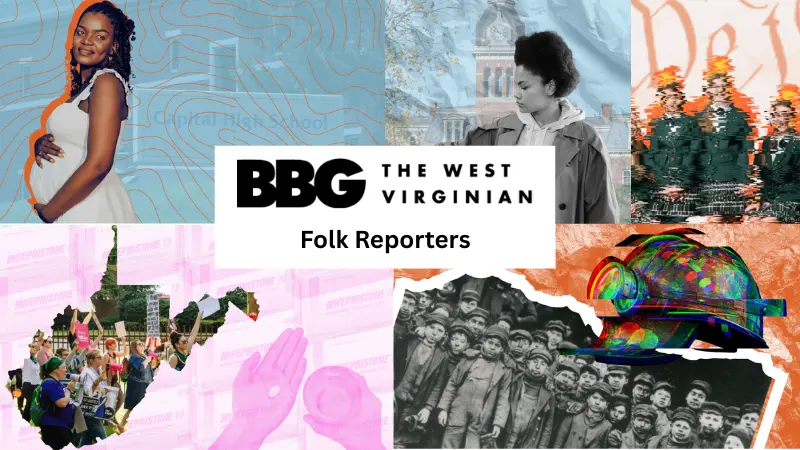
Recent Folk Reporter coverage has included proposals related to maternity leave, abortion pill access, private school regulation, needle exchange program bans and legislation that could weaken child labor protections — policy debates that might otherwise go undocumented.
By expanding the number of people able to cover these spaces, the program helps ensure that decisions shaping rural communities are part of the public record.
How the model works
Community members are recruited through open calls, newsletters and direct outreach. Participants complete training and verification before publishing.
Heffernan leads live and recorded training sessions, in-person workshops and hands-on editorial support to help participants develop reporting skills and understand the mechanics of covering public meetings and legislative proceedings.
Participants who complete the training receive $100–$150 stipends for assignments.
The model adapts City Bureau’s Documenters framework for rural Appalachia, creating a locally rooted reporting pipeline that expands coverage without requiring a fully staffed newsroom in every community.
Why this matters for philanthropists
For funders interested in strengthening civic infrastructure in rural communities, Folk Reporters demonstrates how relatively modest philanthropic investments can produce outsized civic impact.
Programs like this rely on philanthropic support for the connective infrastructure that makes consistent coverage possible: training, coordination, meeting tracking, editorial guidance and stipends for community reporters.
Those investments allow local publishers to expand reporting capacity across large geographic areas while simultaneously building local talent and increasing civic participation.
In practical terms, philanthropic funding helps:
- Expand accountability reporting in communities with limited or no newsroom capacity
- Create pathways into journalism for rural residents and emerging storytellers
- Increase public participation in local decision-making
- Strengthen trust in community-rooted information sources
For funders seeking to support democracy at the local level, this model demonstrates how philanthropy can help ensure that public institutions operate in the presence of an informed public.
A model with national relevance
While the program is rooted in West Virginia, its implications extend far beyond the state.
Rural communities across the country face similar coverage gaps as local newspapers shrink or disappear. The Folk Reporters program shows how community-powered reporting models can help rebuild the civic information systems those communities depend on.
Sustaining and expanding the program statewide will require continued investment in coordination, editing and meeting tracking. But the early results point to a promising path forward.
When communities become part of the newsroom, neighbors become witnesses — and the public record becomes harder to erase.