
News
A Conversation On Risk, Trust And Equity In Philanthropy
August 9, 2023
I recently talked about risk with another nonprofit leader when I realized this is another term in which philanthropy and communities don’t share a definition.
For the other nonprofit leader, risk is associated with an organization’s ability to execute. For me, risk means only taking chances one is comfortable with.
Objectively, The Pivot Fund is a low-risk way to invest in local journalism, considering my news business background and past success in launching and leading philanthropic initiatives. The risk lies in the fact that Pivot’s innovative approach has never been widely tested. Given the potential impact of supporting trusted, hyper-local publishers serving communities of color across the country, it’s a calculated risk worth taking.
But risk is also a term loaded with subjectivity.
Like impact, it’s “squishy,” and is often used in philanthropy to exclude grassroots community initiatives, specifically those led by people of color. I’ve been noodling on how to have a constructive conversation on how risk limits innovation and community impact in grantmaking when I found this compelling piece that reimagines how we can use risk for the betterment of the journalism philanthropic sector and its grantee partners.
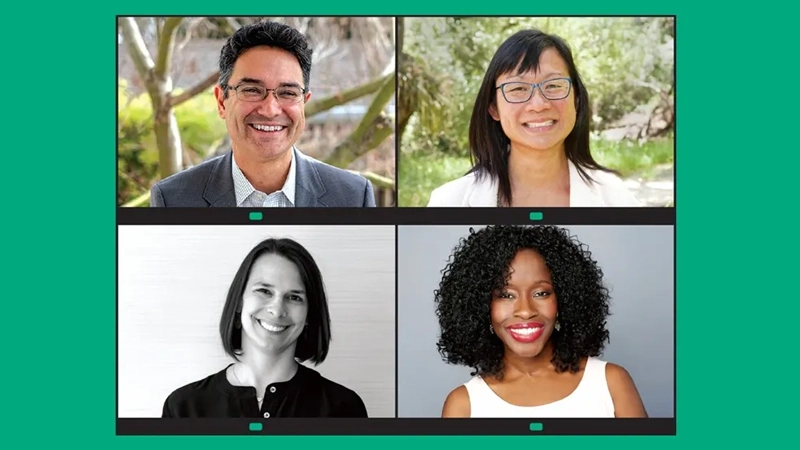
Originally published in an issue of PEAK Grantmaking in 2020, the following conversation features Adin Miller, CEO of the Los Altos Mountain View Community Foundation; Dana Kwwaoka-Chen, Co-Director of Justice Funders; Maya Winkelstein, Partner at the 2030 Fund; and A.Nicole Campbell, CEO of Build Up Advisory Group. A member of PEAK Grantmaking, The Pivot Fund received permission to republish this important discussion.
Adin Miller, Executive Director, Los Altos Community Foundation (facilitator): How do you define risk in philanthropy?
Dana Kawaoka-Chen, Executive Director, Justice Funders: I think risk is one of those words that seems innocuous, but actually has a bunch of coded meanings.
When we talk about risk, we’re really referring to whether we’ve made good or bad decisions about who or what to support. Either way, it’s not necessarily risky. But it’s framed as risk – as if the stakes we experience resourcing work on the ground are the same as those experienced by the folks on the ground: those putting their bodies on the line. The conversation about risk gets framed so that our potential loss of resources is somehow more important than what we are losing in our future.
In the context of climate change, in the context of growing wealth inequality, what’s at risk is a world that works for all of us.
Maya Winkelstein, CEO, Open Road Alliance: I’m going to take a bit more of a pedantic approach.
Because we haven’t taken the time to understand, collectively, what that word actually means, I think risk means whatever the heck you want it to. We use it the same way we used the word “impact” 15 years ago. It means nothing.
Another confusing factor is that grammatically – if you look it up in the dictionary – there’s actually two definitions of “risk.” One is a verb – the idea of risk-taking that Dana spoke to; that is, equating risk with a “good” or “bad” choice. The second definition is risk as a noun, which is simply a measurement of uncertainty; “What could go wrong and how likely is that to happen?” If we start with what it actually means – risk as a measure of the objective uncertainty, and the choices we make around that uncertainty – I think we could develop something very meaningful.
Nicole Campbell, CEO, Build Up Advisory Group: Of course, different organizations have different risk appetites.
But I think what’s important is realizing that, because we’re not holding anyone accountable to a particular definition, risk is defined by the person making a determination. To me, this is what most people define as risky: “It’s different. I don’t understand it. I can’t justify the difference. I don’t trust it.”
Winkelstein: Risk can be an incredibly sophisticated metric, just like measuring impact. Right now, though, risk is just a measure of comfort: It’s how comfortable someone is with whatever they’re looking at, on a very personal and subjective level – whether that’s an impact framework, or a leader, or a participatory decision-making model.
Miller: So the term “risk” is very, very porous. Is there a different term that you have embraced that better reflects the work, or how you have positioned your organization? Is there a better term?
Winkelstein: We’ve struggled with this a lot. We’ve got to come up with some way to separate the subjective side of risk – our bias, our comfort – from the objective reality that the world is unpredictable, so we can then decide how to deal with unpredictability.

The first step is to own it. We have to say, ‘When we use the word risk, it means lots of different things, and in large part, those things are implicit biases.’
A. Nicole Campbell
Campbell: I think that the first step is to own it.
We have to say, “When we use the word risk, it means lots of different things, and in large part, those things are implicit biases.”
Until we’re willing to have that very honest conversation, where we can be vulnerable enough to discuss how we can change, we’re going to be dealing with the same situation.
Kawaoka-Chen: What is the value set that we’re applying when we use this word? If the value is to keep wealth within the organization, that creates conversations oriented around the protection and accumulation of wealth, versus deploying resources back into the hands of communities where that wealth was extracted.
Winkelstein: I agree. Risk is everywhere. It is constantly changing. As long as there is an unknown, there will be risk, and it will take different forms. So, getting underneath the statement “that’s too risky” requires a radically honest conversation: What do you actually care about – money, impact, reputation, legacy? And if you had to prioritize them, how would you? If you go through that exercise, it’s going to reveal not only your risk profile, but your values, your approach, and where you are coming from. That can start to give you a road map of the behaviors that you need to adjust.
If philanthropy redistributed its resources to the community and let them govern where those resources are deployed, we might learn something different about risk.
Dana Kawaoka-Chen
Kawaoka-Chen: Our friends at Movement Generation say that “the heart learns what the hands do” – meaning that you have to change practice before you can change attitudes and beliefs. If philanthropy redistributed its resources to the community and let them govern where those resources are deployed, we might learn something different about risk.
Miller: Dana, can you tell me a little bit about Justice Funders’ guide to social justice philanthropy, The Choir Book, and the practice recommendations that come from it?
Kawaoka-Chen: Our belief is that you can make changes happen across an institution irrespective of your positional power, within the domain of responsibility that you oversee. For instance, what are some of the practices that grants managers have the ability to change that creates more values-aligned practice for the organization?
For an applicant or a grantee, a philanthropic institution’s values are reflected in how they experience a grant application or a grant award or a grant implementation process. So are the practices you use to ask for information rightsized for the kind of award that you are giving? Can you obtain information in ways that don’t place that burden on your applicants and grantees? Is the language clear around what it is your foundation supports? That could look like overhauling the reporting that you’re doing, or changing the due diligence process.
Winkelstein: One frame that can position risk as a positive – something that can actually help with the due diligence process – is to define ‘risk’ specifically as risks to impact.
Imagine if due diligence included all of the barriers that could get in your grantees’ way, and how you as a funder could help remove them.
As opposed to a grading exercise, “I’m going to give your application an A or an F,” we can refocus by saying, “Look, we’re both here because we want impact. The biggest risk is not achieving that.
So how can we both maximize the chance of success?” That frame puts funders and grantees on the same side, rather than in an oppositional relationship.
If you position risk in terms of impact, you can see that, for example, one of the biggest things that get in the way of impact is not having sufficient cash flow. By identifying that as a clear, objective, identifiable risk, it makes it obvious, and easy, to say, “We’re going to release the money whenever you need it – you tell us. We’re going to set our grant cycles according to your cash flows, not the other way around.”
Imagine if due diligence included all of the barriers that could get in your grantees’ way, and how you as a funder could help remove them.
Maya Winkelstein
Miller: Something I noted, once the pandemic really set in, was some organizations moving in that direction just because of need – as a way to streamline their process. To clarify this point: Would this apply to the ongoing evaluation and reporting, as well as the intake process?
Campbell: Values show up throughout the entire process. It’s the monitoring and evaluation, the reporting. the application process, and even the way that you’re awarding funds. Imagine if we provided general support and, along with that, capacity–building resources. Can we talk about what is preventing us from getting to that point? To me, that is where all of that implicit bias sits: all of the assumptions, all of the definitions of risk that we’re bringing to the conversation.
Kawaoka-Chen: I think part of the challenge here is that, often, a philanthropy’s theory of change is rooted in the stance of a particular donor or set of trustees or board members, and not in the communities they are serving. The [grantmaking] process reinforces implicit bias, and the accumulation of power and wealth, because the theory of change is situated to serve the institution.
Miller: Is it disingenuous to say that philanthropy seems to be very data-driven, almost to the point of being clinical? Does it need more of a value-based, people-centered approach?
Winkelstein: I think you’re onto something there, to put it mildly. Trust is not formed by numbers, right? Loyalty, which is an extension of trust, is not informed by data. It’s informed by relationships, by person-to-person connection. So yes, of course, we need to form those relationships.
But the hesitation that I have in throwing out systems designed to bring consistency and rigor – to go all “heart” and lose the “head” – is that we also know that relationships are where bias is born, for good and for bad. If you are relying only on the people you know and trust, that’s often going to lead you to a non-diverse outcome.
Trust is not formed by numbers. Loyalty, which is an extension of trust, is not informed by data. It’s informed by relationships, by person-to-person connection.
Maya Winkelstein
So I think you have to have both: using processes as guardrails, and as reminders to correct our unconscious impulses, but not letting them take over to the extent that you then devalue trust and, dare I say, common sense.
Miller: What are your closing thoughts in terms of the immediate next steps for the field? What would you encourage us to think about?
Kawaoka-Chen: In terms of racial reckoning, in terms of thinking about who this wealth actually belongs to, philanthropy has an enormous opportunity to rethink the way these resources can be deployed so that the communities from which wealth was extracted can govern it. What’s before those of us in philanthropy, individually, is to think about how we do that from whatever perch we sit upon.
It’s also getting going, understanding that the risk for philanthropy is not deploying all the resources we have at our disposal to address the interlinked crises of the economy, climate, and democracy amidst a global pandemic.
Campbell: I would love to see us redefine what we consider to be “big bets,” and the relationship between innovation and risk, to really benefit grassroots organizations that are doing much of the work for under-resourced and marginalized communities. Can we start placing big bets on them? Can we envision a world where that is normal?
I would love to see us redefine what we consider to be ‘big bets’ … to really benefit grassroots organizations. Can we start placing big bets on them?
A. Nicole Campbell
Winkelstein: For the last eight years, one of our banner messages has been, “The world is unpredictable, and the impact sector is not immune.”
I don’t think I’m ever going to have to say that again: COVID has shown us in the darkest, harshest ways what true risk looks like: Risk to impact, risk to life, risk to organizations that have been around for decades. The very fabric of the sector is at risk because of COVID and the political, economic, and social effects.
I think it’s a crisis that we should take advantage of: an opportunity to say, “We’re all on the same page. We get it now.
So what do we do?” As you said, Adin, a lot of foundations have been forced to do these things in response to the crisis, whether it’s moving to unrestricted support, suspending reporting requirements, providing advance dollars, putting out more funds, or just accepting that you’ve got to trust your grantee to figure it out and tell us what’s happening.
I think the most important thing to do is not let it go: Don’t drop those emergency grantmaking budgets in 2021, don’t dismantle that emergency board committee that you put together to improve your COVID grants. Don’t dismantle the culture that you had to create in a matter of weeks, when your foundation was saying, “Program officers, just solve it. We trust you. Talk to your grantees. Figure what they need. Make sure this impact isn’t lost.”
Instead of dismantling what we have built, let’s reinforce it. I think that will move us a long way.