
News
The Local News Crisis Is an Audience Crisis
April 2, 2026
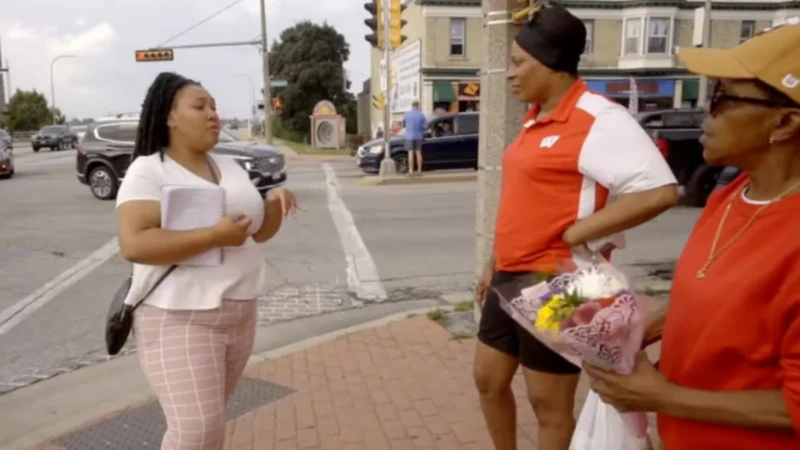
What Wisconsin reveals about the future of local journalism—and why rebuilding starts with the audience.
Wisconsin offers one of the clearest pictures of where local journalism stands today. From Milwaukee to rural communities, traditional newsrooms no longer meet the demand for hyperlocal information.
But outlets like Milwaukee Neighborhood News Service (NNS) show what does work—reporting on housing, education, safety, and services people can actually use, and rebuilding trust by staying rooted in community needs. Its recent merger with Wisconsin Watch pairs community reporting with statewide accountability journalism, pointing toward a more responsive future.
The real issue isn’t just shrinking newsrooms. It’s a growing gap between the information journalists produce and what people actually need.
One resident, frustrated by the lack of coverage of property assessments and local elections, built a plywood bulletin board outside his home to share critical updates with neighbors.
This isn’t just a “news desert.” It’s a news deficit—a lack of useful, actionable information that helps people navigate their lives and participate in their communities.
The audience moved—and traditional media didn’t follow
Most Wisconsin residents no longer rely on legacy outlets as their primary source of local information. Instead, they turn to Google, Facebook groups, TikTok, newsletters, and trusted community voices.
In Milwaukee’s Hmong community, Nyob Zoo Milwaukee TV—a bilingual digital network—has about 6,300 Facebook followers, reaching roughly 50% of the local Hmong population.
Activist Vaun Mayes has built a following of more than 50,000 by showing up in real time at breaking events and sharing information as it happens—reaching nearly one-fourth of Milwaukee’s Black population.
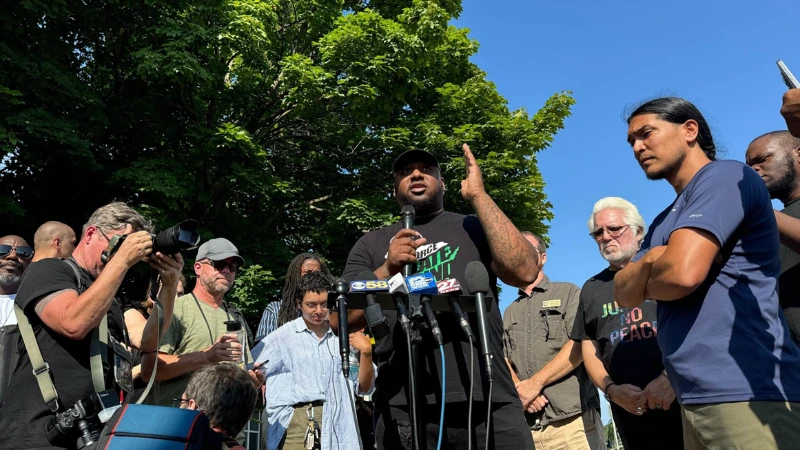
“For whatever reason, I just always ended up in the middle of stuff that was going on,” Mayes said. “So I started crafting that.”
However, both Mayes and Nyob Zoo are based in Milwaukee, underscoring the broader lack of information—and philanthropic support—across the rest of the state.
An emerging ecosystem
As traditional outlets shrink, communities are building their own information networks—through newsletters, social platforms, and trusted local relationships.
People aren’t just looking for headlines. They want to navigate services, understand decisions that affect their lives, and engage civically—but often struggle to find basic answers.
Shannon Ross’s newsletter, The Community, now reaches thousands inside and outside prisons, while rural organizations share information through events and local networks.

These systems already exist. They’re just under-recognized and under-resourced.
Trust lives in people, not institutions
Trust hasn’t disappeared—it has shifted from institutions to people.
Residents turn to those who are visible, engaged, and embedded in their communities—neighbors, organizers, and local leaders—often bypassing traditional outlets entirely.
“If I want information about a social issue or a tribal matter, I go straight to the source,” said Carla Jones of the Lakota tribe in Waukesha.
Community-centered models already work
Wisconsin shows that effective local journalism is already happening—it just doesn’t always look like traditional media.
As NNS and similar models demonstrate, relevance—not scale—is what builds trust. Community leaders sharing real-time information, grassroots newsletters connecting under-resourced populations, and cooperative newsrooms maintaining accountability are all part of this ecosystem.
These efforts succeed because they are audience-first, trust-based, and embedded in daily life.
Philanthropy is misaligned with audience reality
Philanthropy often prioritizes institutions over impact. Metrics like story volume or awards miss what matters: reach, trust, and usefulness.
Meanwhile, many of the most trusted information providers operate with little or no funding. Much of the work of informing communities—especially in moments of need—remains unpaid.
The audience is not just a consumer
Communities are not passive audiences. They actively shape how information flows—through social networks, relationships, and direct engagement.
In many cases, trusted messengers go beyond sharing information. They help people navigate services, access resources, and understand complex systems.
Local media must evolve from one-way communication to ongoing dialogue.
The path forward
Wisconsin isn’t just experiencing the local news crisis—it’s pointing to what comes next.
Communities have already adapted. They are building systems that meet their needs. What’s missing is sustained investment aligned with how people actually access and use information.
The path forward is not about restoring legacy systems. It’s about scaling what already works. Bottom line: Local news doesn’t fail for lack of journalism. It fails when it loses connection to the audience. The future depends on whether communities are informed, engaged, and empowered.