
Analysis
How Communities Are Preserving the Public Record When Traditional Systems Fall Short
January 30, 2026
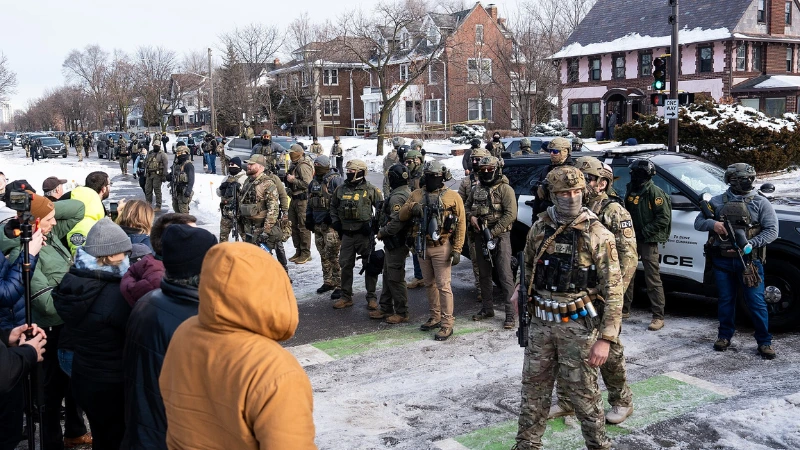
What’s unfolding in Minneapolis shows why communities need trusted journalism systems in place before a crisis hits.
The first casualty of war is the truth—unless truthtellers are on the ground.
In Minnesota, they are. And they are reporting what they see.
Over the past month of federal immigration enforcement operations across Minneapolis, St. Paul, and beyond, independent journalists, community outlets, freelancers, legal observers, organizers, and residents have documented what is happening. Through video, livestreams, and firsthand reporting, they have created a public record that surfaces critical details, challenges official accounts, and debunks false narratives.
We saw it with the killings of Renee Good and Alex Pretti. We have seen it repeatedly as eyewitness documentation contradicts claims made by federal authorities.
This work did not emerge by accident. It exists because Minnesota has a decentralized network of community-rooted journalists embedded in their communities—trusted, present, and prepared when power moves quickly.
At The Pivot Fund, this is the work we are focused on strengthening: independent, community-rooted journalism infrastructure that does not disappear when newsrooms are understaffed, under-resourced, or shut out.
What Minnesota illustrates is a reality Pivot partners describe nationwide: accountability depends on whether communities already have trusted information networks in place before a crisis hits.
When events unfold rapidly, the first draft of the public record is increasingly created by local networks of journalists and residents with phones and cameras. This documentation does not replace journalism. It expands what journalism can verify, investigate, and preserve—if infrastructure exists to support it.
Press Freedom Under Pressure: The Georgia Fort Case
The arrests of independent journalists Georgia Fort and Don Lemon underscore how vulnerable community-based documentation has become. Fort, the founder of BLCK Press, is a trusted information steward in the Minneapolis–St. Paul community, whose reporting has helped preserve accurate public records during moments of crisis.After her release from federal custody, Fort warned that criminalizing journalism is an escalation in what she described as an “information war”—one that threatens the public’s right to know. Her arrest sparked rapid community mobilization, and legal experts and journalists across the country condemned the case as an unconstitutional attempt to chill protected speech.

Despite this, Fort remains focused on her work. “I’m committed to continuing to tell the stories,” she said.
The Power of the Public Record
Recent cases show why community documentation matters.
In Alex Pretti’s death, bystander video contradicted official claims before they could harden into fact.
After Renee Good’s death, eyewitness footage raised questions about official accounts and prompted accountability demands. Fort later hosted a private media briefing to share sensitive material with major outlets—while withholding public release until the family consented.
It was a trauma-informed editorial decision that preserved both dignity and evidence, Fort said.
Soon after, another incident showed ICE agents pulling a disabled woman from her vehicle. Officials called her an “agitator.” Another bystander video showed she was stuck in traffic. Without that footage, the false official narrative might have stood.
The lesson is not that everyone needs to livestream. It’s that when communities document events, publishers can verify, contextualize, and hold systems accountable—if relationships and systems are already in place. This is journalism infrastructure in practice: trusted relationships, ethical judgment, and systems capable of handling sensitive material under pressure.
Recording as Civic Infrastructure
What’s happening in Minnesota is not unique.
Across the U.S., independent documentation has reshaped public understanding of protests, policing, and enforcement actions. These recordings surface moments institutional reporting often cannot reach quickly or might not publish unedited.
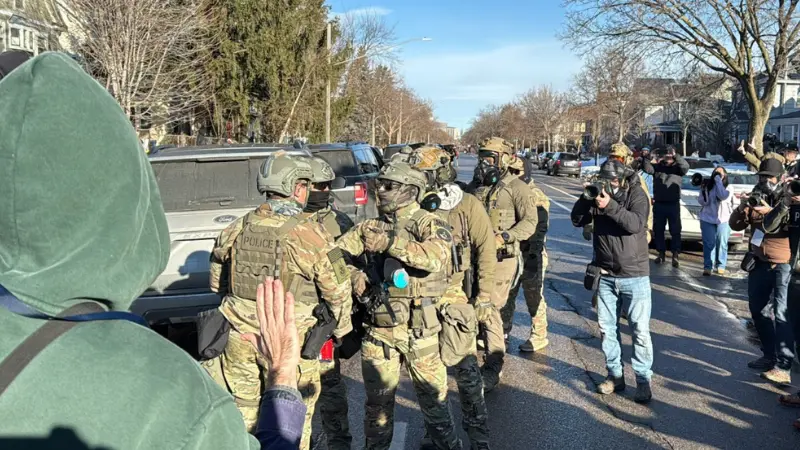
As photographer Timothy Benston writes: “The state can survive outrage. … What it cannot survive is a stubborn record that circulates, persists, and reappears.”
This infrastructure does not replace journalism. It strengthens it.
What This Means for Funders
Minneapolis highlights a shift funders must pay attention to: accountability depends on whether communities have resourced, trusted information networks in place before crisis hits.
Community documentation is already shaping the public record. Whether it strengthens accountability or creates confusion depends on the infrastructure behind it—secure intake systems, verification capacity, legal and safety support, and editorial judgment rooted in trust.
Funders make this possible by investing not just in stories, but in the systems that allow journalists to work under pressure.
In moments of crisis, those systems are the difference between noise and a durable public record.
Journalism doesn’t fail in crises. It fails before crises, when infrastructure is missing.
Why Pivot Is Sharing This
We’re publishing this because Minneapolis reflects a wider shift.
In moments of conflict or enforcement, accountability depends on whether communities can build a record that outlasts press releases and holds up under scrutiny.
Pivot’s partners—and many independent publishers beyond our network—make that possible not because they have endless resources, but because they are trusted, close to the story, and built for the moment. That is why investing in community-rooted journalism isn’t optional. It is infrastructure. It is what communities rely on when the stakes are highest.