
Resources
‘Our Coverage Has Been Deeply Affected’: How Enlace Latino NC Navigates ICE Risks at Protests — and What Other Community Newsrooms Can Learn
November 19, 2025
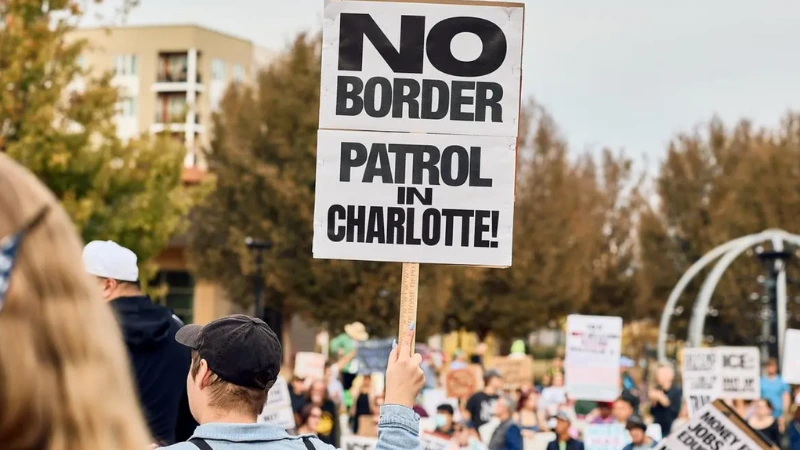
When Enlace Latino NC prepares to cover an event or protest today, nothing feels routine.
Founder Paola Jaramillo says the immigrant-led newsroom has had to rethink everything — from what reporters wear to who can safely go into the field — because the U.S. Immigration and Customs Enforcement’s (ICE) presence has become increasingly unpredictable.
“We now cover these events with a mix of caution, planning, and training that wasn’t necessary before,” Jaramillo said. “We’ve learned to protect ourselves and adapt our coverage without losing our community focus.”
The newsroom’s team has received rights trainings, they use visible credentials and hold pre-coverage briefings to plan routes, identify safe zones, and establish emergency communication. Assignments have also shifted.
“We have to be very careful about who we send into the field,” she said. “There’s a real fear of being detained or misunderstood by authorities while doing our job…and a lack of clear protocols from ICE and other agencies during enforcement actions only adds to that risk.”
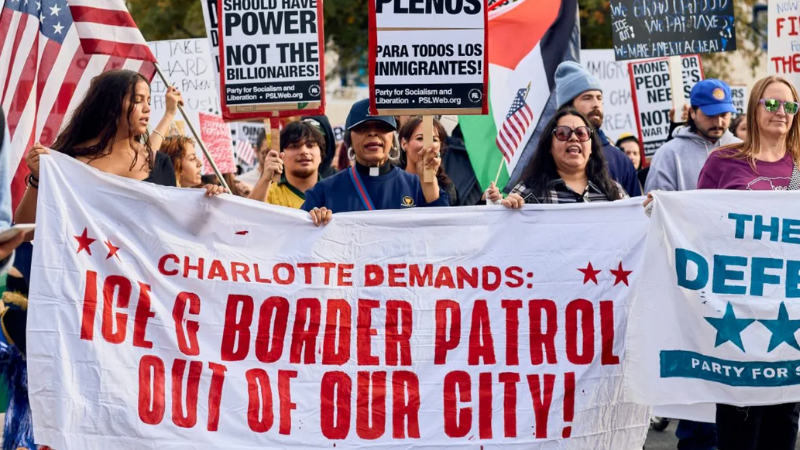
Enlace Latino NC is currently covering the immigration raid centered on Charlotte, where Border Patrol arrests reached 250 on Wednesday, according to the Department of Homeland Security (DHS). The operation, which began over the weekend, marks the latest phase of President Donald Trump’s mass-deportation efforts, with the Border Patrol performing functions typically carried out by ICE, though both agencies continue operating in the state. Enlace Latino NC’s experience reflects what many community-led newsrooms are facing nationwide:
- Underscore Native News was the only outlet present during a Portland march that escalated into ICE detainments.
- MG News is still grappling with the detention and deportation of reporter Mario Guevara.
- El Tecolote led an immigrant-centered emergency response during a chaotic 48-hour federal “surge” in the Bay Area.
These moments show how quickly ICE actions can intensify — and why community journalists need clear safety guidance. As Jorge Luis Sierra, digital security expert and president of the Border Center for Journalists and Bloggers, warns: “Lack of training can elicit a disproportionate response with excessive force against people around them.”
What Community Publishers Are Doing — and What Experts Recommend
To support safer reporting, The Pivot Fund consulted Sierra of the Border Center for Journalists and Bloggers and the Committee to Protect Journalists (CPJ), with added input from Nonprofit Secure, a Pivot Fund partner for on-demand safety and security support.
1. Preparation Is Protection
- Scout locations and identify safe exits.
- Never work alone; always send pairs or teams. “We no longer send just one person,” Jaramillo said.
- Establish clear check-in schedules.
- Use visible press credentials — but assess whether they increase safety or risk.
- If approached by law enforcement, identify yourself and document badge numbers, time, and details.
“Every situation is different,” Sierra notes. “Every journalist and publication needs to make decisions based on the conditions and risks of each situation.”
2. Protect Devices and Data
Because ICE and other federal agencies often use surveillance tools, experts recommend:
- Using a secondary or encrypted phone.
- Removing sensitive information before covering protests.
- Backing up footage immediately.
- Turning off facial recognition and encrypting data.
Within 100 miles of any U.S. border — including international airports in cities like New York, Los Angeles, and Chicago — Customs and Border Protection can legally search or seize devices without a warrant.
3. Special Considerations for Immigrant Journalists
This is where Jaramillo’s newsroom has seen a dramatic shift.
Immigration status now affects who can safely cover an event, and even small misunderstandings can lead to detention.
“Before, a reporter could step off the sidewalk to get a better photo,” Jaramillo said. “Today, we’re cautious about the smallest movements because the fear of being detained is always there.”
Editors should:
- Have immigration counsel on call.
- Ensure emergency contacts have access to needed documentation for temporary visa holders, DACA recipients, and others.
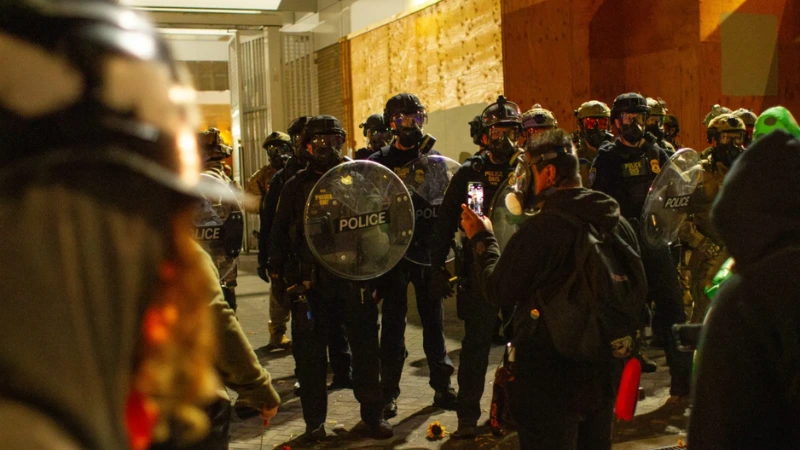
4. If Violence Erupts
- Stay 10–15 meters from confrontations.
- Identify cover before filming.
- Drop low immediately if gunfire or rubber bullets appear.
- For livestreams, one person reports while another watches for threats.
CPJ’s Katherine Jacobsen notes that the expansion of ICE officials’ presence across the United States, as well as the placement of National Guard troops in some major metropolitan areas, sends a harmful message about safety, potentially escalating protest situations in a way that makes reporting conditions less safe for journalists: “It’s a poor use of taxpayer funds. People’s dollars are going toward limiting access to information.”
5. Shared Responsibility
Editors must set realistic expectations and avoid pushing journalists into unsafe situations. Small outlets often rely on freelancers and emerging reporters — people who may face higher risks of surveillance or misunderstanding.
Many newsrooms are now sharing safety protocols, exchanging emergency contacts, and debriefing emotionally after difficult assignments.
Grounded, Not Fearful
Jaramillo stresses that safety concerns haven’t stopped Enlace Latino NC from reporting — but they have reshaped how they work.
“We remain committed to providing useful, ethical, and compassionate journalism — reporting for our community with accuracy, humanity, and care, while keeping our journalists safe,” she said.
Experts agree: preparation, solidarity, and shared knowledge allow community journalists to continue their work with both courage and caution.